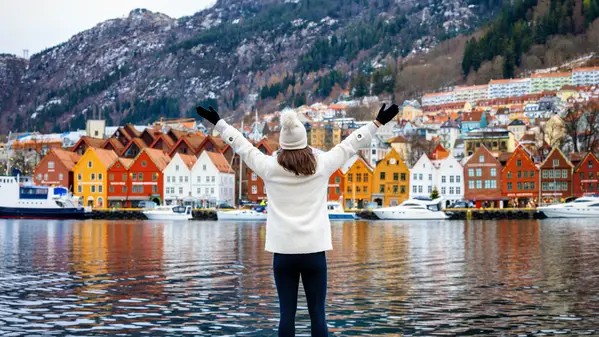
48 hours in Bergen: a complete city guide
Spend a perfect two days in Bergen wandering timber-clad Bryggen, hiking misty mountains, cruising shimmering fjords, and sampling fresh seafood
With its multicoloured harbour framed by the magical landscapes of fjords and seven mountains, Bergen is an enchanting place to visit. In Norway's second-largest city, you’ll find everything from the picturesque UNESCO-listed Bryggen wharf — with its crooked timber houses that look like they’ve had one too many drinks of aquavit — to the mist-shrouded hills (it rains a lot here), the epic fjord landscapes, and a world-class dining scene.
Known as the "gateway to the fjords," Bergen refuses to be just a pit stop. With its cultural merchant past, world-class art museums, picturesque sights, and epic outdoor adventures, it's a city with many sides, and it can be hard to know where to start. Whether you’re seeking relaxing experiences, must-see sights, or the opportunity to live like a local, this 48-hour Bergen travel guide has our picks of what to see, what to eat, and what to do to get a true taste of this city in just two days.
Day 1
Morning: Bryggen Wharf and Vågen harbour
Start your first day acclimatizing to the city in quintessential Norwegian fashion: down by the harbour with a coffee and a skillingbolle (a Norwegian cinnamon bun) that's sweet, sticky, and satisfying.
Fuel up before heading to nearby World Heritage-listed Bryggen Wharf, where you can wander the narrow lanes of Bergen's oldest quarter and take in the multicoloured, crooked timber buildings that hold stories dating back to the Middle Ages. Once used to house merchants in the 18th century, they now contain cafés, local studios, and bustling shops.
From here, it’s a short walk to the waterfront and Vågen harbour. Fishing may no longer be Bergen’s economic lynchpin, but the bustling main harbour with its bobbing boats and constant activity is still the focus for locals and tourists alike. Spend a while here soaking up the atmosphere and watching the world go by.

Experience it for yourself on: In the Wake of the Vikings: Orkney, Shetland & the Faroe Islands
Afternoon: Foraging, hiking, and canoeing
Jump on a boat at the harbour and meet a local guide for a foraging tour to a nearby island cove where you hunt down periwinkles, seaweed, and crabs to cook up a hearty seafood soup on an open fire. It's authentic, hands-on, and as Nordic as it gets.
Back on shore, take your pick of viewpoints. If you want to lace your shoes up and get the heart racing, climb the 908 steps of Stoltzekleiven, a brutal 36% gradient trail to Sandviksfjellet's summit at 1,368 ft. Fitness freaks race up in under eight minutes, while normal humans take about 30 minutes. The vista at the top justifies your burning quad muscles.
If you prefer a slower pace, let the Fløibanen funicular whisk you up to the Fløyen viewpoint so you can snap panoramas of the city below. From here, stroll for 10 minutes to Lake Skomakerdiket and take to the water again on a free canoe ride. Round it all off with a warming cup of hot chocolate at Fløistuen Kafé to channel full Norwegian koselig (cozy) energy.
Evening: Hearty Norwegian cuisine
Tonight, eat like a Bergenite. Head to Pingvinen, an old favourite for true Norwegian home cooking. The menu reads like a Norwegian grandma's love language and changes regularly, but you can always count on comfort. Try the reindeer, a fish pie, or the raspeballer (potato dumplings). It’s authentic, cozy, and full of locals hankering for the meals their parents and grandparents used to cook.
Day 2
Morning: Swim, sauna, and fjords
Rise early and channel your inner Norwegian with a morning swim and sauna to start the day right. Take the plunge at Nordnes Sjøbad's heated seawater pool, where locals sip black coffee between tension-melting sauna sessions.
Refreshed and rejuvenated, head to the harbour to take in the fjords in all their glory on a four-hour cruise to the narrow Mostraumen straits. Arrive early for window seats or wrap up warm and go alfresco to spot wildlife, pretty waterfront villages, and epic waterfalls reflected in the deep water.

Experience it for yourself on: Norway Fjord Trekking
Afternoon: Seafood and a culture fix
Bergen has survived for centuries on the sea, and there's no better place to feel that history than at the Torget Fish Market. This lively open-air market is your lunch spot for everything from fresh salmon and calamari to fish and chips. The smoked salmon here is some of the best in all of Norway.
Next, it’s time to take in some of Bergen’s cultural hot spots. For Scandinavia's biggest art and design collection, hit KODE, the umbrella name for Bergen’s art museums. Whether you're into the national silver collection (KODE 1), contemporary exhibitions (KODE 2), or seeing works by Edvard Munch (KODE 3), Bergen has a gallery with your name on it.
If classical music is more your jam, jump on the light rail towards Troldhaugen, the former residence of legendary Norwegian composer Edvard Grieg. The beautiful lakeside setting alone is worth the trip.
Evening: City views, hot dogs, and beer
For the ultimate in sundowner romance, catch a cable car to the top of Ulriken, the highest of Bergen's seven mountains, to watch an unforgettable sunset from above the city. For adrenaline seekers, don a helmet and get your heart racing with a zip wire back down the mountain to the city, hitting speeds of up to 92km/h (57 mph).
For dinner, check out the legendary Trekroneren hot dog stand for sensational sausages. Go for the reindeer sausage with lingonberry sauce and crispy onions for a real taste of Norway. On your last night in Bergen, head to Skostredet, a cozy and intimate cobblestone street packed with independent bars and restaurants. Folk og Røvere is a particular favourite with locals and tourists on the hunt for good craft beer.

FAQs
When is the best time to visit Bergen?
Bergen wears all seasons well, but if you want long days, cool hikes, and a lower chance of getting drenched, aim for May to September. Summer brings bright, long nights (sometimes the sun barely sets), buzzing streets, and fjord adventures on tap. Autumn hits with bold colours and fewer crowds. Winter gives you crisp air, cozy cafés, and hygge energy.
What currency is used in Bergen, Norway?
Bergen runs on Norwegian krone (NOK), and nearly all outlets accept contactless cards.
What essentials should I pack for Bergen?
Norwegians are famous for saying that there’s no such thing as bad weather, just bad clothing, and when you see the rainfall stats for Bergen, you can see why. Essentials for your Bergen packing list include:
– A waterproof jacket (Bergen laughs at umbrellas)
– Layers you can peel off or pile on, especially when hopping between the shore and water
– Comfy walking shoes; even though it’s a city break, there are plenty of active pursuits to try
– Swimwear for saunas and sea dips
– A beanie
If you forget something, the shops around Bryggen have you covered.

What’s the best thing to eat in Bergen?
If you eat one thing in Bergen, make it seafood. The city has fjords on its doorstep, so the catch of the day goes straight from boat to plate. Try fresh prawns, buttery salmon, or classic fish soup that warms you right through. Norwegians also take big pride in brunost (brown cheese). It’s sweet and caramel-ish, and it sounds weird until you try it. Spread it thick on warm bread.
Then there’s raspeballer (potato dumplings) and klippfisk, salted and dried cod cooked into hearty stews. Don't leave without grabbing a skillingbolle, Bergen's cinnamon bun with a cult following.
What’s the best thing to drink in Bergen?
Start with coffee — Bergen treats it like religion. Later in the day, ease into local brews or go full Viking and sip aquavit, Norway’s herbal spirit that warms you from the inside out. Skål (cheers)!
How do I get around Bergen?
Walk, take the bus, or jump on the Bybanen (light rail). The city centre is compact, lively, and built for exploring on foot. Save taxis for late nights or heavy rain bursts.
Is Bergen expensive?
Yes, it can be. Norway isn’t shy about high prices, but street eats, bakeries, supermarkets, and simple seafood spots help keep costs under control. One of the easiest wins? Grab a Bergen Card. It gives you free entry to loads of museums, free public transport, discounted fjord cruises, and money off attractions you’re probably hitting anyway. If you’re packing your days with exploring, it pays for itself fast.
Is Bergen safe?
Absolutely. Norway scores high on safety, and Bergen feels laid-back and welcoming. As with any destination, trust your gut, stay aware, and enjoy the freedom. Every spot we visit on a G Adventures tour is carefully vetted. Our local CEOs (Chief Experience Officers) live and breathe these places, so you're in expert hands from the moment you arrive. We keep it responsible, safe, and big on local know-how, so you can focus on adventure, safe in the knowledge that you’ll be well taken care of.
What’s the weather like in Bergen?
Short answer: changeable. Long answer: It can rain… a lot. But the misty hills, moody harbour, and sudden bursts of sunshine give the city serious magic. Dress right and keep moving.

Do I need a travel adapter in Bergen?
If you’re not from mainland Europe, yes. Norway uses Type C and F plugs with 230V voltage.
Are businesses open on Sundays?
Most shops close, but cafés, restaurants, and attractions (museums, viewpoints, and tour offices) stay open, but check online before you go out.
Why should I book a Norway trip with G Adventures?
G Adventures has been perfecting the art of small-group adventure travel for more than 30 years. We know that the difference between a good trip and a life-changing adventure comes down to three things: the right group size (small enough to be flexible, big enough to be fun), local guides who are part of the community and who know where the real magic happens, and itineraries that balance must-see highlights with those pinch-me moments you never saw coming in unique destinations.
Is G Adventures good for solo travellers?
Absolutely! Most travellers on G Adventures trips are solo, and our small-group adventure tours make it easy to connect fast. Our Solo-ish tours are specifically designed for solo travel, prioritizing safety while giving ample opportunities to meet locals and other travellers. These tours are perfect for adventurous spirits who want the freedom of solo travel with the security of group support.

Which G Adventures tour should I book to Bergen?
For an epic Bergen active adventure, try Norway Fjord Trekking. This seven-day small-group tour starts in Bergen and takes you through fjords, waterfalls, glaciers, and mountains. Hike iconic spots like Trolltunga, cruise the fjords, and explore Norway’s wild landscapes with a max group of 15. It’s active, adventurous, and perfect for travellers who want culture, nature, and big views in one trip.
Where’s a great place to visit after 48 hours in Bergen?
If you've wrapped up your Bergen whirlwind and you're itching for the next adventure, point yourself inland to take in more iconic Norwegian landscapes. Jump on the train to Myrdal and ride the legendary Flåm Railway. It’s one of the most scenic train trips on the planet: deep valleys, expansive views, and waterfalls tumbling from cliffs. Roll down into tiny Flåm and grab a cinnamon bun by the fjord before cruising deeper into Norway’s nature.
You could also jump on a ferry from the harbour and delve deeper into the fjords, stopping in one of the fjord villages, like Ålesund, for a night or two on the water. Seeing the dramatic shadows dance on the water at different times of day is surreal.
If you want to go bigger, stay on the rails and ride the Bergen–Oslo railway. This train line slices straight through the country’s wild heart: high mountain plateaus, snow-dusted peaks (even in summer), and wide-open landscapes that feel otherworldly. It’s the kind of journey where you stare out the window and forget your phone exists.
Whether you’re chasing fjords, forests, or full-on Nordic drama, Bergen could be just the beginning.

Read more from
Why this traveller finally embarked on a solo trip in her 50s
Turning 50 inspired Rima Chakravarty to finally embark on her first solo group tour to Southern Spain
Read more from
How a Caye Caulker bike tour is supporting students’ education
On Caye Caulker, see how one school is transforming education — and futures — for the island’s young people
Read more from
What’s the real value of small group tours? Insights from an experienced solo traveller
Discover why small group tours are a smart, stress-free choice for solo travellers, through Lydia’s experience
Read more from
48 hours in Tbilisi: a weekend in Georgia’s capital
Dive into the heart of Georgia for 48 hours, strolling through historic streets, relaxing in a sulfur bath and exploring local cuisine
Read more from
Jellyfish, drifts and giants: the very best things to do in Palau
Dive into one of the world’s last frontiers to learn about marine conservation, snorkel across kaleidoscopic coral reefs and more