Journeys: Kruger, Victoria Falls & Namibia
18 days, Johannesburg to Victoria Falls

Itinerary
Day 1Johannesburg
Arrive at any time and transfer to your hotel. Enjoy a dinner with your fellow travellers tonight.
Our accommodation is in the Rosebank area, just north of central Johannesburg. The hotel is conveniently located, should you have additional time. Taxi's can be easily arranged to get you around.
If you are interested in spending more time in Johannesburg, it is recommended to book pre-accommodation to enjoy the sights of the city at your own leisure.
Arrival Transfer
You will be met at the airport and transferred to the hotel to start your adventure.
Arrival Day and Welcome Meeting
The adventure begins tonight. Feel free to explore before your welcome meeting, but make sure you’re back in time to meet the group. Check for the meeting time on the welcome note at the hotel. After introductions, your CEO will review the details of your tour. Please note that normal check-in times apply at our start hotels, but you can usually store your luggage for the day if you arrive early.
Meals included:
DinnerDay 2Johannesburg/Greater Kruger Area
Set out towards Kruger National Park via the magnificent Panorama Route, one of the world’s most picturesque drives. Make stops at the dramatic Blyde River Canyon and Bourke's Luck Potholes, and take in panoramic views of the forest-covered valley from the God's Window viewpoint. Continue to our lodge near Kruger National park, savour a delicious South African Dinner in this picturesque location.
Today is a very long driving day; however, we will make many stops along the way at sites along the Panorama Route.
Private Vehicle
Settle in and scan the scenery from the convenience of a private vehicle.
Panorama Route Scenic Drive
Enjoy a scenic drive along the famed Panorama Route. You’ll see magnificent mountains, panoramic passes, valleys, and waterfalls. There will also be stops at Blyde River Canyon, Bourke's Luck Potholes, and God's Window.
Meals included:
Breakfast | DinnerDay 3Kruger National Park
Rise early and climb aboard an open jeep for a full-day safari in Kruger National Park—home to an extraordinary array of large mammals. Spot elephants, lions, giraffes, and perhaps elusive leopards as we explore this breathtaking wilderness of savanna and scrubland. Return to our lodge in the evening, where you can take some time to relax and enjoy the nocturnal sounds of the bush.
At over 19,000 sq km (7,500 sq mi), South Africa’s Kruger National Park is one of the largest and most impressive animal reserves in the world. With 147 species, Kruger has more species of large mammals than any other park on the continent.
Kruger National Park Open Vehicle Wildlife Safari Drive - Full day
Hop in a 4x4 safari vehicle and get yourself one step closer to the surrounding nature. Be ready to spot elephants, giraffes, hippos, lions, zebras, and many other species in this impressive South African national park.
Meals included:
Breakfast | DinnerDay 4Greater Kruger Area/Karongwe Private Game Reserve
Travel to the Karongwe Private Game Reserve, a pristine wildlife sanctuary located in the Greater Kruger area. Meet with a researcher from the Endangered Wildlife Trust’s Cheetah Range Expansion Project—a program funded in part by National Geographic’s Big Cats Initiative. Sit back for a lecture and learn about efforts to protect the region’s cheetahs and other carnivores. After, the researcher then joins us for a wildlife-viewing excursion through the reserve.
For the next two days, enjoy ranger-led morning and evening wildlife safari drives in an open safari vehicle in Karongwe Nature Reserve, searching for Africa's famed Big Five. With over 9,000 hectares (22,240 acres) of supreme African bushveld, Karongwe Private Game Reserve is home to many creatures, and our safari drives provide several opportunities for wildlife viewing.
We use various accommodations within the reserve (the location is based on availability). During your time here, you will either stay in lodge rooms or very comfortable permanent tents (both of equal quality and with similar amenities).
Wildlife safari drives are conducted with qualified wildlife rangers and local expert trackers who will share their vast experience of the African bush.
On some occasions, if space is unavailable, we may need to change accommodations or even use a different private reserve. In such a case, be assured we will choose other lodges or comfort camps (of equal quality) within the Greater Kruger area.
Private Vehicle
Settle in and scan the scenery from the convenience of a private vehicle.
Your Journeys Highlight Moment: Carnivore Conservation Experience
Meet with a researcher from the Endangered Wildlife Trust's Cheetah Range Expansion Project. Listen to a talk about cheetahs here and the important research this project is doing. We will also discuss conservation within parks and reserves in South Africa and National Geographic's Big Cats Initiative. You will then be accompanied by the researcher on a wildlife safari drive to give you more insight into cheetahs and other carnivores.
Meals included:
Breakfast | Lunch | DinnerDay 5Karongwe Private Game Reserve
Spend the day exploring Karongwe on morning and afternoon safaris with our local guides. Search for Africa's famed "big five" as we drive through the shrublands of the bushveld. Back at camp, relax on deck or take a walk around the grounds before enjoying a traditional South African dinner with your fellow travellers.
Wake up before the sun (around 5am) and sip your morning coffee before heading out on a morning wildlife safari drive. Return to the lodge for brunch and some leisure time. Converse on the deck, walk the grounds and gardens, and enjoy high tea. Following tea, it's time for a late afternoon safari drive. After spotting tons of wildlife, it’s time to return to camp and freshen up before dinner, a traditional braai.
Karongwe Private Reserve Open Vehicle Wildlife Safari Drive
Jump into a safari 4x4 and keep your eyes open for fantastic wildlife encounters. Wildlife safari drives are conducted with qualified wildlife rangers and local expert trackers; both will share their vast experience of the African bush.
Free Time
Relax and enjoy some down time between wildlife safari drives.
Your Foodie Moment: Boma Braai
At Karongwe, the Boma dinner will indulge your taste buds with South African cuisine, while you enjoy the African wilderness. Take part in a culinary journey that reflects South Africa’s rich cultural and culinary heritage, all from an enclosed outdoor area, lit by lanterns and a warming fire. You’ll taste your way through traditional dishes including braaied meats (Barbeque), potjiekos (traditional pot stew), and a malva pudding (traditional dessert); all made from local ingredients. Both your stomach and your heart will be full from this cultural immersion, nature connection, social interaction, and delicious meal.
Meals included:
Breakfast | Lunch | DinnerDay 6Karongwe Private Game Reserve/Johannesburg
Embark on one last safari this morning, keeping a lookout for Karongwe’s iconic inhabitants. Then head back to the city, where you’ll enjoy dinner in our lodge.
Karongwe Private Reserve Open Vehicle Wildlife Safari Drive
Jump into a safari 4x4 and keep your eyes open for fantastic wildlife encounters. Wildlife safari drives are conducted with qualified wildlife rangers and local expert trackers; both will share their vast experience of the African bush.
Private Vehicle
Settle in and scan the scenery from the convenience of a private vehicle.
Meals included:
Breakfast | DinnerDay 7Johannesburg/Windhoek
Fly to Windhoek and transfer to your hotel. Enjoy free time to explore the Namibian capital this afternoon.
Plane
Look! Up in the sky! It's a bird! It's a plane! It's... yup, it is a plane, actually.
Meals included:
BreakfastDay 8Windhoek/Sesriem
Set off from the Namibian capital towards Sesriem, the gateway to jaw-dropping Namib-Naukluft National Park. Drive past red-hued desertscapes, stark camel thorn trees, and dramatic curved dunes while keeping an eye out for the astonishing creatures that call these arid lands home—the oryx, springbok, jackal, hyena, and more. Settle in to our lodge and relax poolside, watching a fiery crimson sunset over the desert.
Enjoy postcard perfect desert scenery around Sesriem and Sossusvlei - vast desertscapes of reds and orange, stark camel thorn trees and towering dunes with dramatic curved ridges. Also keep an eye out for the surprising amount of wildlife that call this area home such as oryx, springbok, jackal, ground squirrel and hyena.
Private Vehicle
Settle in and scan the scenery from the convenience of a private vehicle.
Meals included:
Breakfast | DinnerDay 9Sesriem
Embark on a thrilling excursion into one of Africa’s largest national parks. Explore the Namib desert, the oldest desert in the world; and venture to the massive dunes at Sossusvlei and the white clay pan of Deadvlei. Capture dramatic images of dead camel thorn trees against a backdrop of orange dunes and a crisp blue sky. Then visit the Sesriem Canyon, a natural gorge carved out by the Tsauchab River over millions of years.
Private Vehicle
Settle in and scan the scenery from the convenience of a private vehicle.
4x4
Roads? Where this rough-and-ready vehicle's going, we don't need roads.
Sossusvlei Dunes Visit
This area is famous for its high, red sand dunes. This clay and salt pan is surrounded by the dunes, making it a spectacularly beautiful sight with a remote and isolated feel.
Sesriem Canyon Visit
Enjoy a short stop at Sesriem Canyon, a small canyon typical of the area. The Tsauchab River flows through the canyon every five to ten years, and this creates the nearby salt and clay pan of Sossusvlei.
Meals included:
Breakfast | Lunch | DinnerDay 10Sesriem/Swakopmund
Continue by road through changing desert landscapes towards the coastal city of Swakopmund. Look out for roaming zebra, kudu, springbok, and oryx on the way, and take a break in the quirky town of Solitaire before heading into the countryside. Here, we meet a local for a 4x4 drive through the desert, learning about the survival strategies of bushmen who lived in this inhospitable area thousands of years ago. We also search for the smaller wildlife that has managed to survive here, such as snakes, geckos, spiders, and an array of insects.
Private Vehicle
Settle in and scan the scenery from the convenience of a private vehicle.
Living Desert Tour
Hop into a 4x4 vehicle and set out into the desert. An expert guide will point out signs of animal life and emphasize survival in the harsh desert landscape for both humans and animals.
Meals included:
Breakfast | LunchDay 11Swakopmund
Enjoy a free morning in Swakopmund, getting a taste of the town’s unique Afro-German culture; or opt for sandboarding in the Namib desert. This afternoon, take a tour of Mondesa township with a local guide, learning about its people and history. Visit the local market for an introduction to traditional foods such as wild spinach, mopane worms, and dried sardines or kapenta. Stop by an arts and crafts shop; chat with the locals; and round off the day with dinner and a performance at a cozy family-run establishment.
Explore the town's unique mix of German and African culture and opt to visit curio shops, the museum and restaurants. Optional activities include sandboarding.
Free Time
Enjoy a free morning in the historic coastal town of Swakopmund.
Your Journeys Highlight Moment: Mondesa Township Walk
Visit the community of Mondesa Township with an expert resident guide. Learn about its daily life, history and traditions through an immersive experience with the welcoming people that live here. Visit its lively market for an introduction to traditional foods like wild spinach, mopane worms, and dried kapenta fish. Also visit an arts-and-crafts shop that helps train the township’s youth in traditional crafts. Drop by a shebeen (tavern) to enjoy a favourite drink, and meet some local residents. Finally, continue on to a nearby family run establishment for dinner and local entertainment.
Optional Activities - Day 11 HideShow
Fat Tire Bike Tours
480NAD per personDiscover the beauty of Namibia’s landscapes on a fat tire bike tour, from a scenic ride through the world’s oldest desert to the historic streets of Swakopmund. Whether you choose to partake in a thrilling adventure or take your time exploring the desert’s unique flora and fauna, this is a unique way to journey through one of the most breathtaking regions of Namibia.
Sandboarding in the Namib Desert
700NAD per personHead out into the desert, grab a board, and surf the sand dunes. Choose to lie down headfirst, or stand up, surfer-style.
Sea Kayaking
800NAD per personExperience the beauty of the Namibian's Coast visiting the Bird Island near Swakopmund and admiring the ocean nature beauty. Keep an eye out for playful seals as your guide offers information about the area.
Meals included:
Breakfast | DinnerDay 12Swakopmund/Damaraland
Make your way to Twyfelfontein—Namibia’s first UNESCO World Heritage site—to see some of Africa’s largest concentrations of petroglyphs. Marvel at these remarkable engravings, carved by prehistoric hunter-gatherers and depicting rhinos, elephants, and ostriches, as well as human and animal footprints. Then continue to our lodge on the heart of the Damaraland area. Enjoy some free time to swim in the pool or admire a colourful sunset from the deck.
Private Vehicle
Settle in and scan the scenery from the convenience of a private vehicle.
Prehistoric Rock Engravings Guided Tour
Step back in time to see prehistoric rock engravings made during the early Stone Age. Their exact origin is uncertain, but these works depicting animals and hunters are probably the work of Bushmen or Nama artists estimated to have lived near Twyfelfontein at least 5,000 years ago. Marvel at the more than 2,500 rock carvings and paintings and understand why this is Namibia's first UNESCO World Heritage Site.
Private Vehicle
Settle in and scan the scenery from the convenience of a private vehicle.
Meals included:
Breakfast | DinnerDay 13Damaraland/Etosha National Park Area
Enjoy a relaxed morning at our lodge and explore the rich sandstone treasure of Damaraland. In the afternoon, travel towards Etosha National Park, arguably Namibia’s most spectacular wildlife sanctuary. Settle into our lodge, located outside of the park.
Free Time
Enjoy a free morning at the lodge, and opt for a self-guided walk in the property.
Private Vehicle
Settle in and scan the scenery from the convenience of a private vehicle.
Meals included:
Breakfast | DinnerDay 14Etosha National Park Area
Spend a full day on safari in Etosha National Park, where open grasslands converge on a massive salt pan. Etosha harbours some of the largest populations of lions, elephants, and other endangered species, so keep your camera on the ready as you explore in your open vehicle. Enjoy lunch at one of the park’s rest areas, where you can also take a swim; and sit back and watch all manner of creatures—including hundreds of species of birds—flock to the nearby watering hole.
After the vast desert, Etosha National Park, offers a contrast of wide open grasslands, a massive salt pan that covers 4731km² and tall camel thorn trees intermixed with Mopani trees. With a combination of natural waterholes, and diverse vegetation, wildlife flock to the park. Some of the largest elephants in Africa can be found in areas of thicker vegetation, as well as leopards. Lions, giraffe, ostrich and many antelope species can be found in the grasslands, while birders will love the salt pans which attract flamingos in the rainy season. More than 340 bird species have been counted in Etosha National Park including the European bee-eater, the kori bustard and numerous migratory birds.
Etosha Open Vehicle Wildlife Safari Drive
Set off in an open 4x4 safari vehicle with a naturalist guide in search of the stunning wildlife in the park. Wildlife often come to the many watering holes to drink, so keep your eyes peeled for many animals on the move.
Meals included:
Breakfast | DinnerDay 15Etosha National Park Area/Windhoek
After breakfast, visit the Cheetah Conservation Fund, a global research and education center founded by National Geographic Grantee Dr Laurie Marker. Tour the facility to learn about the important conservation and community outreach work they do to protect the world’s fastest land animal, and enjoy a talk by one of the researchers. Then head out on a drive through the grounds to meet some of the center’s rescued and rehabilitated cheetahs. Continue to Windhoek for our final evening.
Private Vehicle
Settle in and scan the scenery from the convenience of a private vehicle.
Your Journeys Highlight Moment: Cheetah Conservation Experience
The Cheetah Conservation Fund is a global field research and education facility founded by Dr. Laurie Marker whose research has been supported by National Geographic. Tour the centre and learn about the important conservation and community outreach work they perform as one of the world’s leading organizations dedicated to saving the cheetah in the wild. One of the program’s researchers will give us a lecture before we head out on a cheetah drive to view some of these incredible creatures up close in their natural habitat. Conclude the experience by sitting down as a group for lunch on the veranda that overlooks the magnificent Waterberg Plateau.
Meals included:
Breakfast | LunchDay 16Windhoek/Victoria Falls
Catch a flight to the town of Victoria Falls in Zimbabwe, named after one of the most powerful waterfalls on Earth. Visit a nearby village and go grocery shopping in the bustling market. Then sit down with a local family for dinner, helping your hosts prepare a traditional Zimbabwean meal using the ingredients you picked out, and hear stories about local life and culture.
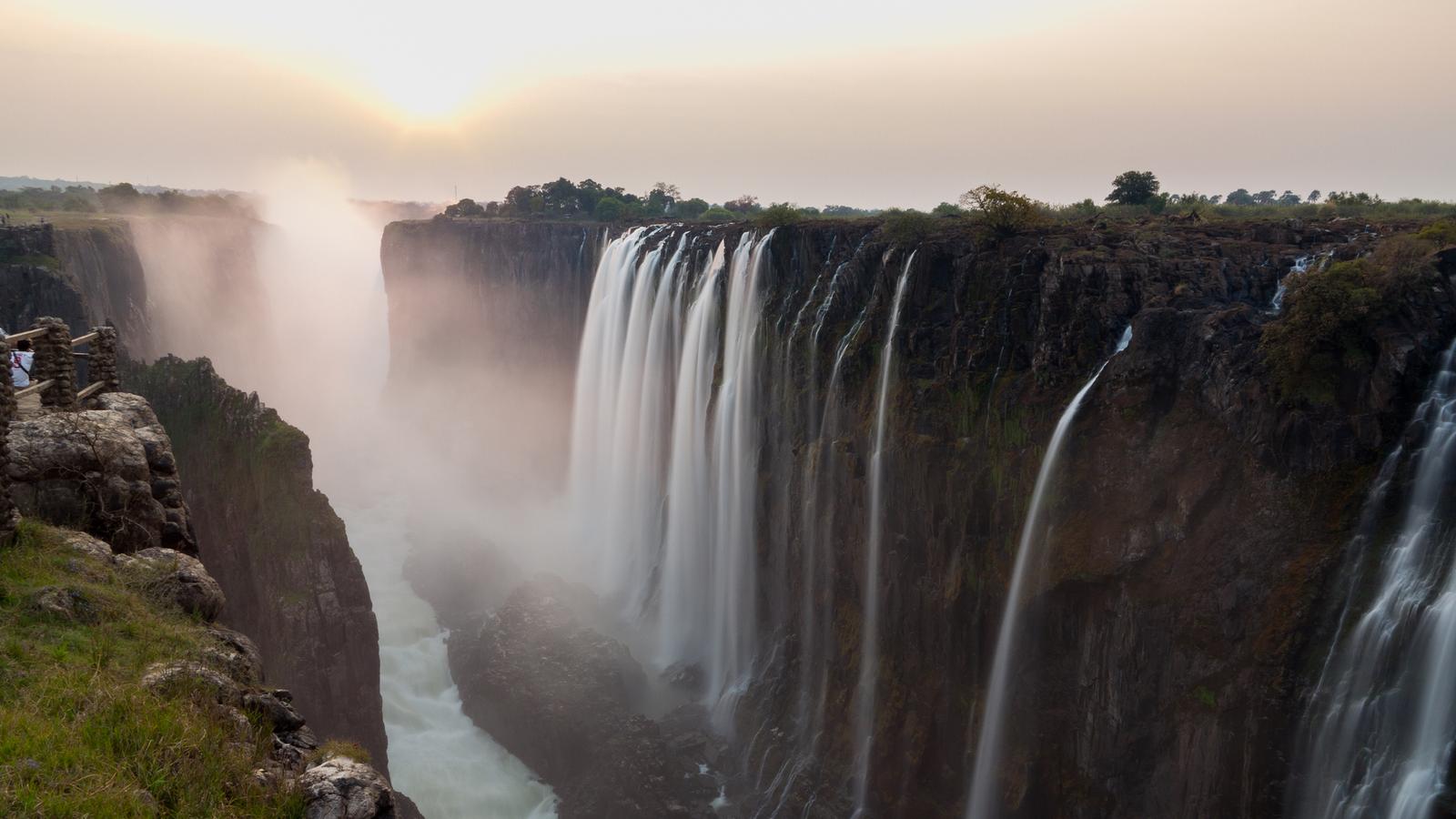
The mist off Victoria Falls can rise to a height of more than 400m (1312 ft). Local tribes used to call the falls Mosi-o-Tunya or “the smoke that thunders.” Explorer and missionary David Livingstone renamed the falls after Queen Victoria when he first saw them in 1855.
Plane
Look! Up in the sky! It's a bird! It's a plane! It's... yup, it is a plane, actually.
Your Journeys Highlight Moment: Zimbabwean Family Dinner
Flatter Ncube is the head of her family which includes two sisters and numerous children. She’s the youngest of a family of 10 and, now in her early 40s, lives in the village she was raised in near Victoria Falls. There she takes care of her extended family on their homestead, which she and they have been proudly building by hand, brick by brick, for years. Flatter’s story highlights that life isn’t easy in Africa, but despite its challenges, there is much love and laughter and a strong sense of family here.
Visit Flatter’s homestead in her rural village; meet her and some of her family, and walk with some of them throughout the property, among the fruit and vegetable plants the family grows for consumption. (They even plant hot chillies among the vegetables to discourage nosy elephants.) Then help the family prepare a traditional Zimbabwean dinner, which we'll all eat together outside on the property, weather permitting. Ingredients for the meal will have been hand-selected earlier in the day, at the bustling and friendly local village market.
This experience offers great insight into typical African life, and ultimately reinforce how we all really want and need the same things in life: a stable home full of love, a good education, and plenty of opportunity for our children.
Meals included:
Breakfast | DinnerDay 17Victoria Falls
Set out for a tour of magnificent Victoria Falls. Scottish explorer David Livingstone named them after Britain’s Queen Victoria, while their older, indigenous name is Mosi-oa-Tunya—“the smoke that thunders.” Opt to take a day trip to wildlife-rich Chobe National Park or enjoy a sunset river cruise.
If you have an activity planned for this morning, we will reschedule your Falls tour for this afternoon, or tomorrow morning.
Victoria Falls Tour
Head out for an unforgettable experience at Victoria Falls. Explore the rainforest and learn about the geology, history, and local legends of this world wonder. After your immersion, get up close to the falls and discover the beauty of “the smoke that thunders.” Be sure to have your camera ready!
Optional Activities - Day 17 HideShow
River Song Sunset Cruise
82USD per personEnd the day with a sunset cruise. Relax on one of the sofas on board as the sets and keep an eye on the water for wildlife sightings. There will be an abundance of snacks throughout the cruise and a selection of cocktails, juice, water, and soft drinks.
Victoria Falls Historic Bridge Tour
55USD per personJourney through over 100 years of history in this engaging, theatrical, and educational tour. Led by an enthusiastic team of guides, wander through the history of this remarkable structure, from its design and initial prefabrication in England, to its construction in Africa. The bridge, an engineering masterpiece has a history that is entertaining and tragic in equal measure.
Full Day Excursion to Chobe National Park
Depart Victoria Falls in the morning for a full-day guided tour of Chobe National Park in Botswana - a wildlife-abundant region covering about 11,700km² of the Northern Kalahari. Begin your adventure with a cruise down the Chobe River, taking in the sweeping views and witnessing the wildlife grazing along the riverbank. Enjoy an included lunch on land before boarding 4x4 safari vehicles for an afternoon wildlife safari drive with an expert guide. Keep an eye out for lions, elephants, and buffalos. Transfer back to Victoria Falls, Zimbabwe, arriving in the early evening. Please note that this activity includes two border crossings between Zimbabwe and Botswana. The ordering of activities is susceptible to change.
** Please note that you need to get a double-entry visa or a Univisa when arriving in Zimbabwe to ensure you can return again without needing to pay an extra visa fee.
Meals included:
BreakfastDay 18Victoria Falls
Depart at any time.
Departure Day
Not ready to leave? Your CEO can help with any onward travel arrangements you require.