Morocco Kasbahs & Desert
8 days, Casablanca to Marrakech

Itinerary Notes
Please note that if you are travelling to Morocco between November and February, your tour will have a level of flexibility based off of winter weather conditions on roads in the mountains. Heavy snow is not uncommon, so plan on packing warmer clothing to suit conditions.
Itinerary
Day 1Casablanca
Arrive at any time.
Please note that this tour does not spend any time in Casablanca.
You may wish to come a day early in order to explore Casablanca, and take some time to see its medina, beachfront, and classic examples of Art Deco architecture.
Be sure to also visit the spectacular Hassan II Mosque. Entrance is only permitted via guided tours, which operate from Saturday to Thursday (closed Fridays) at 09:00, 10:00, 11:00, and 14:00. These times are subject to change (particularly around Ramadan), please double check times with your hotel. Tickets can be purchased at the mosque.
A general note about this tour: it has a very fast-paced itinerary, which covers a lot of ground. This is great as it allows us to see a huge amount in the time available, but it also means some early starts, some long drives in the minivan, and less free time than many other G Adventures tours.
Your Welcome Moment: Welcome Moment - Meet Your CEO and Group
Your opportunity to meet your CEO and fellow travellers, and learn more about your tour. Opt to join the group for a local meal afterwards. Don't forget to see the notice in the lobby (or ask reception) for the official time and place to meet up with the group.
Accommodation
Below is an example of the hotel we may use in this city. For the actual hotel your specific departure will be using, please check your voucher.
Moroccan House Hotel Casablanca (or similar)
Day 2Casablanca/Fès
Enjoy a G Adventures-supported traditional lunch. Take a guided tour of the ancient Roman ruins of Volubilis before continuing on to Fès.
Start early and drive through the rolling hills to the Roman ruins of Volubilis. Take a guided tour of the best-preserved Roman ruins in this part of Northern Africa, now a UNESCO World Heritage Site.
After, continue to Fès, one of Morocco's most interesting cities. Take some free time to explore upon arrival. Opt to experience a traditional hammam and get to know the locals.
We will be staying in the the new city of Fès, built by the French during their Protectorate of Morocco. This area has the feel of a French provincial town, with its cafés, restaurants, and wide boulevards. Head off for a Moroccan feast at one of the many restaurants and finish off the night with some famous Moroccan mint tea.
Private Vehicle
Settle in and scan the scenery from the convenience of a private vehicle.
Your G for Good Moment: AFER Association Community Lunch
Enjoy a G Adventures-supported traditional lunch that benefits rural Moroccan women and children with disabilities. The association provides vital services including literacy and vocational training, health services, disability assistance, and the operation of a local ambulance. AFER’s training center hosts culinary programs recognized by the state, and each year it graduates 30 students, many of whom go on to work in the project. Through this work, AFER creates sustainable employment, fosters community cohesion, and showcases Moroccan culture to travellers. During your visit, enjoy a traditional home-cooked Moroccan meal, featuring classic dishes such as vegetable tagine or roasted chicken with onion sauce, and meet some of the women that are part of this important community program. This experience not only supports livelihoods but also celebrates Moroccan heritage and rural resilience.
Volubilis Guided Tour
Listen to a certified local guide explain life in the Roman Empire at this UNESCO World Heritage site. Visit the impressive, well-preserved Roman ruins. Peer into old bathhouses, marvel at the still-present mosaic floors, and gaze up at towering marble pillars. Hear stories about life in this Roman city that will leave you in awe of just how far their empire stretched.
Private Vehicle
Settle in and scan the scenery from the convenience of a private vehicle.
Accommodation
Hotel Mounia Fes (or similar)
Meals included:
Breakfast | LunchDay 3Fès
Explore the labyrinth of streets within the famous Fès medina with a local guide. Marvel at one of the ancient tanneries and take in the view from above.
Enjoy a half-day medina walking tour, with free time in the afternoon to explore more of the city.
The Fès medina is the world’s largest living medieval medina and a UNESCO site. Explore the artisan quarters, sample treats from the carts, and view Fès' famous leather tannery from above.
Fès Medina Guided Tour
Follow a local guide through the Fès medina, one of the world’s largest medinas with more than 9000 winding streets lying within 365 hectares. See buildings in the medina that date back to the 9th century; there are 350 mosques in the medina that are still in use today. Enter through one of the great gates into the chaos. Explore the artisans’ quarters as well as the many carpenters, bakers, butchers, and spice sellers. Visit the mausoleum and the Al Qarawiyin University. A highlight of the tour is the view of the famous Fès tannery from the balcony of a leather shop, where you can observe the men hard at work treating and dyeing the different hides. Take some time to shop for leather goods before returning to your hotel.
Free Time
Visit more of this lovely city and if you're stuck, there's always room for mint tea at an outdoor café.
Optional Activities - Day 3 HideShow
Shop Fès Medina
FreeSpend some time in the medina checking out carpet shops, sampling local delicacies at the food stalls or shopping for leather goods. Prepare to bargain, just don't get lost wandering the passage ways!
Ville Nouvelle Exploration
FreeHit the newer part of Fès to see life in action. Find a sidewalk café to sip mint tea and watch everyday life go by.
Dinner in Converted Fès Riad
400-500MAD per personSit down to a fantastic meal in a renovated riad, a Moroccan palace that has been transformed into a restaurant. Tantalize your taste buds and senses with delicious, local cuisine accompanied by music and belly dancing.
Belghazi Museum
20MAD per personHoused in an exquisite 17th-century building, the gallery showcases different art styles passed through generations in Morocco, such as ceramics, embroidery, instruments, and costumes. Climb up to the rooftop for a panoramic view of the city.
Accommodation
Hotel Mounia Fes (or similar)
Meals included:
BreakfastDay 4Fès/Merzouga
Drive south to the edge of the Sahara Desert before riding a camel into the dunes and overnighting in a desert camp.
Start early today for a drive through the Middle Atlas Mountains to reach the edge of the Sahara.
In late afternoon, set off by camel to a desert camp deep in the dunes. Learn to tie a turban to keep the desert sun off your face and add a little flare to your photos.
Enjoy a warm welcome (with mint tea). A traditional dinner under the stars, cooked by our hosts, awaits. In the evening, listen to stories about life in this region and, perhaps, some traditional music on the drums.
Notes for the Sahara Desert tented camp stay:
There will be a chance to repack and take only overnight bags out to the desert. The accommodations are basic, with four people per tent (though feel free to sleep out under the stars). Bathroom facilities are basic and shared.
Mattresses with sheet and blanket are provided. For winter months (Nov- April), we recommend bringing a sleeping bag for additional warmth.
There will be the chance to shower upon arrival in Merzouga the following morning.
Private Vehicle
Settle in and scan the scenery from the convenience of a private vehicle.
Camel
Ride out to the tented camp for the night. Local guides will teach you how to mount and dismount and other handy camel-related safety tips.
Your Local Living Moment: Overnight at Berber Desert Camp
Head out into the dunes by camel to sleep like a Bedouin in the Sahara Desert. Drink mint tea, eat delicious traditional fare, and listen to stories about life under the desert sun. Enjoy a quiet night sleeping beneath the starry desert skies.
Meals included:
Breakfast | DinnerDay 5Merzouga/Todra Gorge
Walk through local village farmlands and explore Todra Gorge.
Rise early to get on our trusty camels. Watch the sunrise before returning to Merzouga.
Continue through a stone desert to the stunning Todra Gorge. Wedged between massive cliff walls, the gorge is filled with a green oasis of palm trees. This serene spot is great for hiking, relaxing on the edge of the river or sampling some local Berber delicacies.
Camel
Head back to Merzouga and wave goodbye to your new humpback friend.
Private Vehicle
Settle in and scan the scenery from the convenience of a private vehicle.
Accommodation
Hotel Amazir (or similar)
Meals included:
BreakfastDay 6Todra Gorge/Aït Ben Haddou
Visit the Aït Ben Haddou Kasbah, a UNESCO World Heritage site. Opt to participate in a tagine cooking class for an intro to Moroccan cuisine.
Travel along the “Route of 1000 Kasbahs” to the thriving town of Ouarzazate for a lunch stop. This town is home to Atlas Film Studios, where many films have been shot over the years, including Lawrence of Arabia and Gladiator.
Continue on to the fascinating and beautiful Aït Ben Haddou, a wonderful example of a kasbah.
Private Vehicle
Settle in and scan the scenery from the convenience of a private vehicle.
Aït Ben Haddou Kasbah Tour
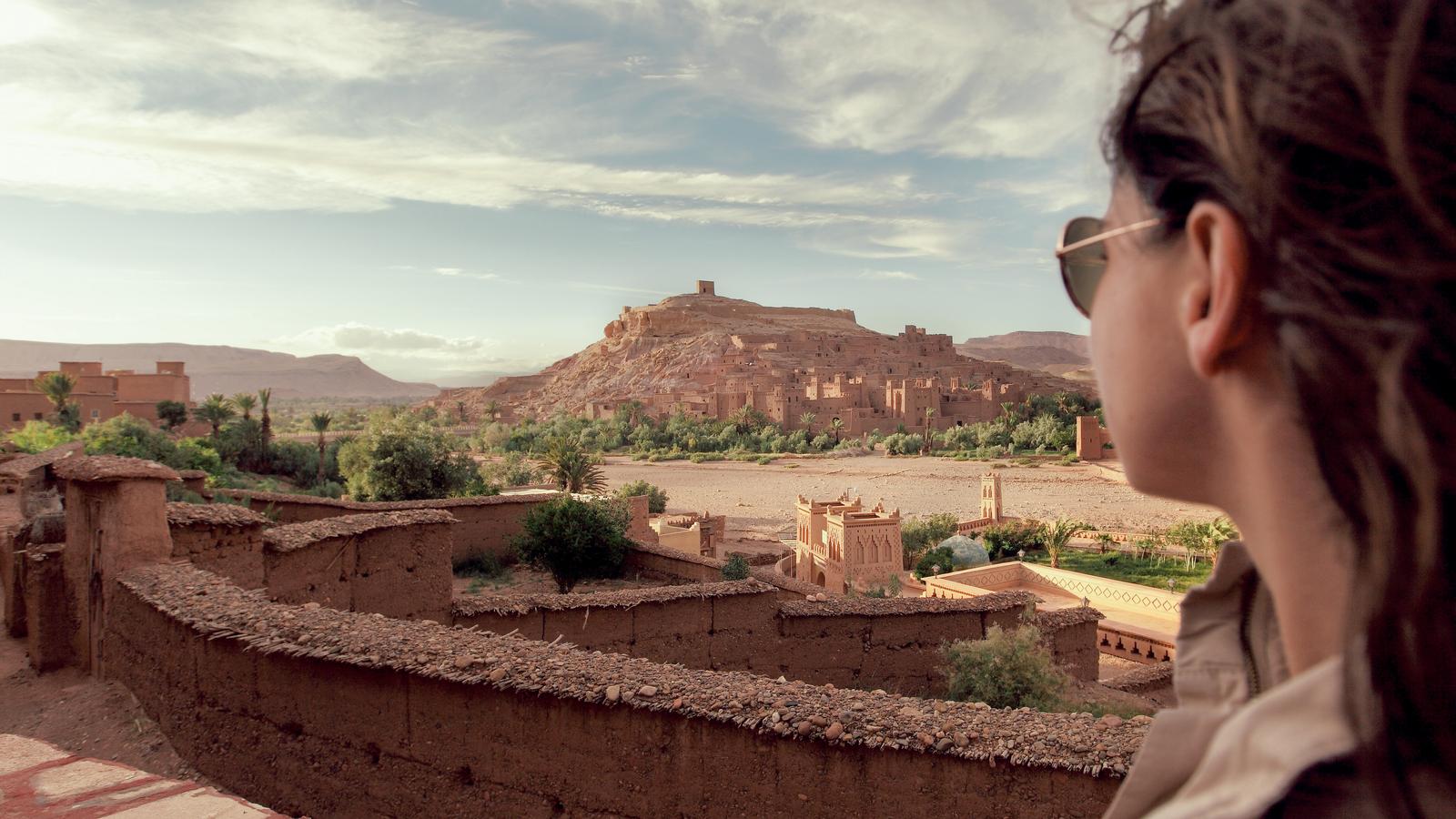
Explore the UNESCO World Heritage site and kasbah of Aït Ben Haddou, the most famous ksar in the Ounila Valley, located in the foothills of the southern slopes of the High Atlas Mountains. Of all the remaining kasbahs in Morocco, the walls and interior of this area are the most intact. It's a collective grouping of dwellings inside defensive walls and was once one of the many trading posts on the route linking Sudan to Marrakech. The kasbah still houses a few families, but many now live in the adjacent village. Like many of the earthen built fortresses in Ouarzazate, Aït Ben Haddou has been used in many film and television productions like Gladiator, Babel, and Game of Thrones.
Optional Activities - Day 6 HideShow
Tagine Cooking Demonstration
120MAD per personLearn all about the quintessential Moroccan dish — tagine. Learn about the tagine itself (a clay pot) and different ingredients and spices. Enjoy the fruits of your labour for dinner.
Accommodation
La Rose du Sable Ait Benhaddou (BB) (or similar)
Meals included:
BreakfastDay 7Aït Ben Haddou/Marrakech
Head to Marrakech and take a guided medina visit. Opt to visit the Djemaa el Fna Square in the evening to see the gathering of musicians and street performers. Don't leave without indulging in a feast at the famous food stalls.
The journey to Marrakech includes breathtaking views throughout the High Atlas Mountains via the Tizi n’Tichka Pass (2260m).
Arrive in Marrakech in time for lunch with the rest of the day free to wander the city.
Private Vehicle
Settle in and scan the scenery from the convenience of a private vehicle.
Marrakech Medina Guided Tour
Head into the maze of tiny streets and alleyways of the ancient medina to really get a taste of everyday life in Marrakech. Shop to your heart’s content in the souk and search out spices, traditional jalabas and slippers, or the famous Moroccan lanterns. Visit the Saadian Tombs - a complex of sepulchers and mausoleums that house the remains of Saadian Sultan Ahmed Al Mansour Ed Dahb. The tombs were sealed off until their re-discovery in 1917. Tour the grounds of the Bahia Palace, marvelling at the intricate decoration, and experience the sights and sounds of the bustling Jemaa el-Fnaa square.
Optional Activities - Day 7 HideShow
Musée de Marrakech
50MAD per personWander around the salons of the ornate Mnebhi Palace displaying various collections of Moroccan art forms.
Traditional Moroccan Dinner with Folklore Entertainment
Experience a traditional 3-course dinner in the heart of the medina of Marrakech - Djemma El Fana square - and enjoy a folklore performance.
Jardins Majorelle
200MAD per personVisit this enchanting garden in the heart of the city designed by French painter Jacques Majorelle (1886-1962). Follow the pathways through trees, exotic plants, streams, and pools while watching the numerous birds who call this peaceful paradise home. (Please note that the entrance fee to Musée Yves Saint Laurent is an additional 30 MAD.)
El Badi Palace
70MAD per personVisit the ruins of what was once the most ornate palace of the 16th-century. Its sunken gardens and pools give a glimpse into its former glory.
Djemaa el Fna Market Square Visit
FreeWander past fresh orange juice stalls and water sellers in colourful costumes reminiscent of an era past. See storytellers, magicians, and peddlers of traditional medicines as the day progresses. When the sun sets, the square fills with dozens of food stalls, and is packed with locals, entertaining chefs, and waiters. Grab a spot on a bench with other diners and try the “tanjia” (slow cooked lamb), harira soup, grilled seafood, famous Moroccan couscous, tajine, snails, or even sheep’s head (for the truly adventurous). Wash it all down with some spiced tea.
Accommodation
Moroccan House Hotel Marrakech (or similar)
Meals included:
BreakfastDay 8Marrakech
Depart at any time.
Not ready to leave? Your CEO can help you book extended accommodation.