
Poonam Binayak
Freelance writer
Freelance writer

India has a way of showing up on every solo traveller’s bucket list and every ‘maybe next year’ list at the same time. It’s a country that rewards the curious and occasionally overwhelms the unprepared – sometimes in the same afternoon. But hundreds of thousands of people travel solo across India every year, and most come home saying it was one of the most rewarding trips they’ve taken. The trick isn’t bravery. It’s preparation.
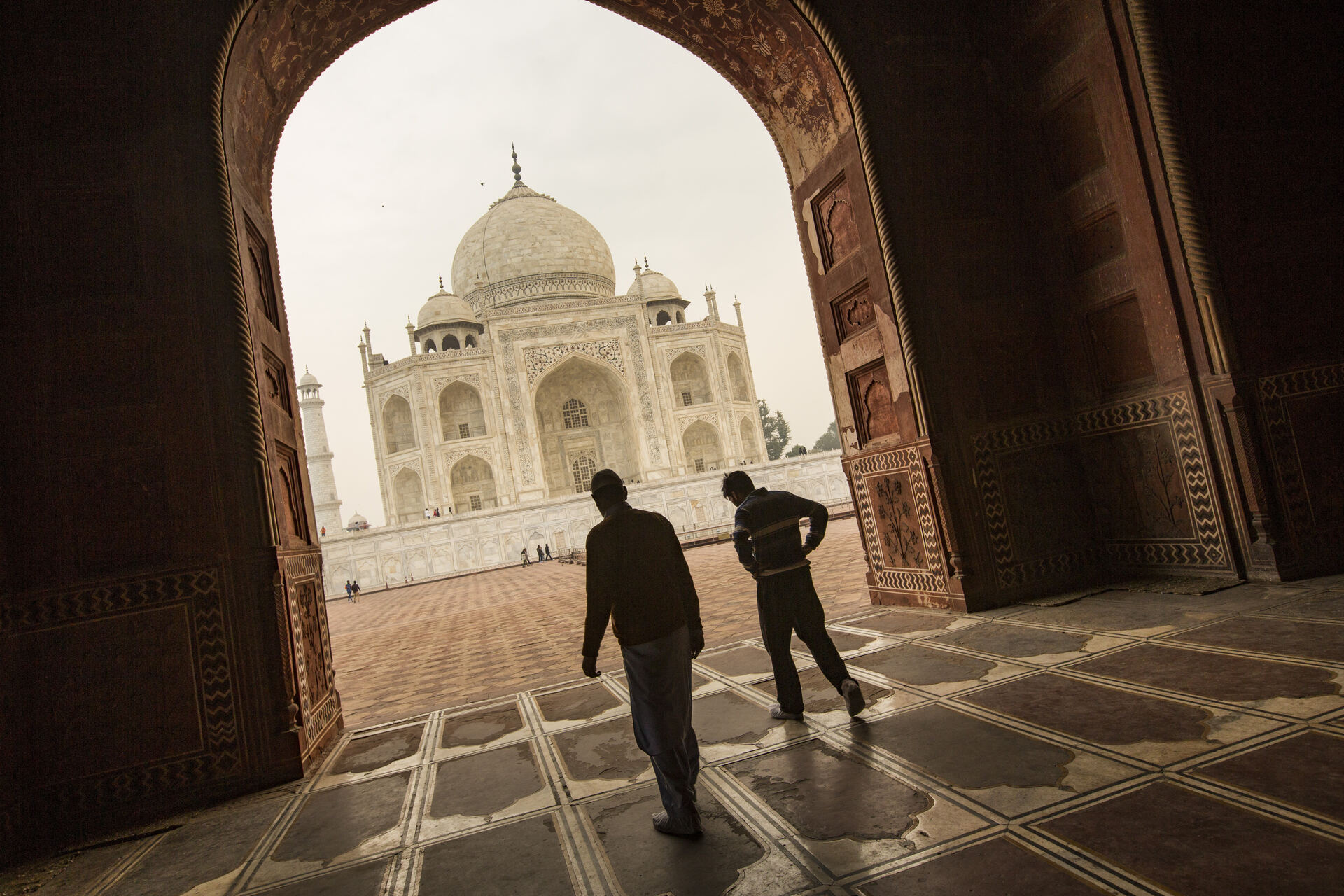
Citizens of most Western countries – the US, UK, Canada, Australia, most of the EU – must apply for an e-Tourist Visa entirely online. Eligibility runs to well over 170 countries, though the exact list and fees shift, so check the portal directly. Apply at least a few days ahead, since the form takes a while to complete even though approval can move fast once submitted. You’ll also need to complete a free e-Arrival Card online within three days of landing – it takes five minutes.
Sort connectivity before you fly, too. An eSIM from a provider like Airalo or Holafly is the easiest route – grab one on home Wi-Fi before you leave, so it’s already loaded and ready the second you land. These run on Indian carrier networks (mostly Jio and Airtel) and activate automatically once you connect, though expect to pay more per GB, with a month of use running closer to $15-30. If you’d rather go local, Jio, Airtel and Vi are great Indian providers, but you’ll need your passport, a visa copy, a passport photo and proof of address, and it can take a full day to get up and running. Once you’re set up, topping up is easy – just recharge online with a credit card whenever you’re running low. Either way, expect to pay somewhere between USD $4 and $6 for about a month of solid 4G and 5G data – plenty for navigation, ride-hailing, food delivery apps and booking trains.
Travel insurance is non-negotiable – SafetyWing, True Traveller and World Nomads are solid picks. Confirm two things: adventure/altitude cover if you'll trek in mountainous regions like Ladakh or Himachal Pradesh, and medical evacuation of at least US$100,000 (group operators like G Adventures require proof of USD $200,000).
There’s no compulsory vaccination to enter India, but see a doctor six to eight weeks out anyway; typhoid, hepatitis A and B, and tetanus boosters are commonly recommended, and depending on your route, Japanese encephalitis, rabies, or antimalarials.
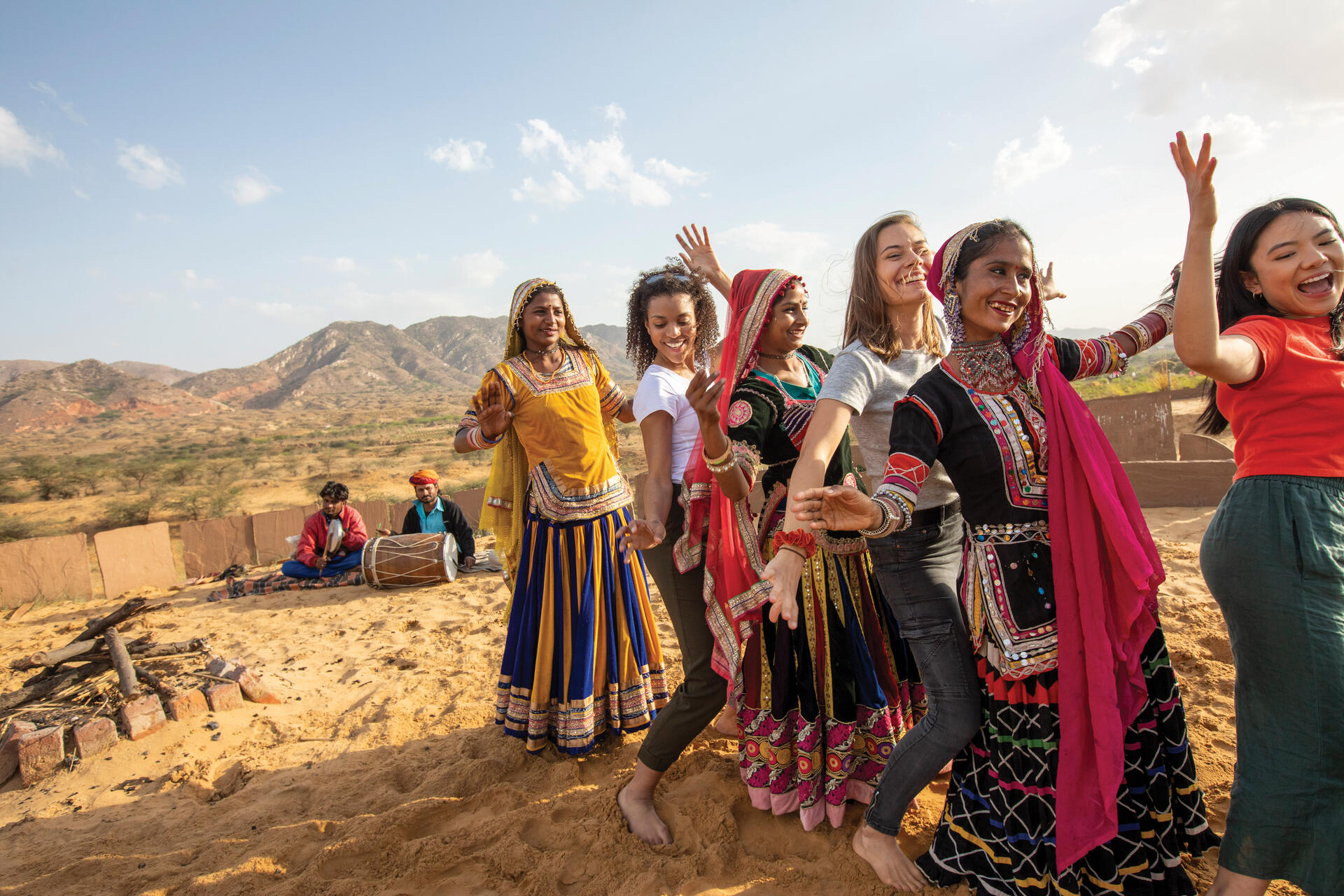
Trains are the classic way to travel between cities, so book the right class: AC First Class is a fully enclosed, lockable coupe – most private and secure solo. AC Two-Tier, with curtained berths, is a good middle ground. AC-three tier drops the curtains and packs in more berths per bay, but keeps the AC and bedding, so it’s a solid option if you’d rather save a bit than have full privacy. Bring a small padlock and cable lock for your bag regardless. Book through the official railway website IRCTC directly, or a platform like 12Go Asia that handles verification for you, and use the erail.in app for live running status. If a train’s sold out, check the Foreign Tourist Quota on IRCTC, which lets visitors book up to a year ahead with their passport and visa details.
For longer hops, fly IndiGo, Air India, Air India Express or Akasa Air. Book a few weeks ahead to get cheaper fares. For venturing deep into the countryside or the hills, buses – particularly Volvo AC coaches – are a comfortable option. RedBus and MakeMyTrip both let you book and pick your seat ahead of time. Stick to daytime buses as a solo traveller: routes into the hills can be windy and infrequent enough that you want daylight, a working phone signal, and a clear head if plans change.
Within cities, Uber and Ola are affordable and give you a paper trail – a driver name, a licence plate, a shared trip link – that matters more when you’re travelling alone. Pre-book your airport transfer rather than negotiating with touts at arrivals – the “your driver’s car broke down, I’m your replacement” scam specifically targets people arriving alone and unsure of the setup. Autorickshaws are everywhere; always agree the fare or insist on the meter before getting in, and never share a taxi or rickshaw with anyone but the driver.
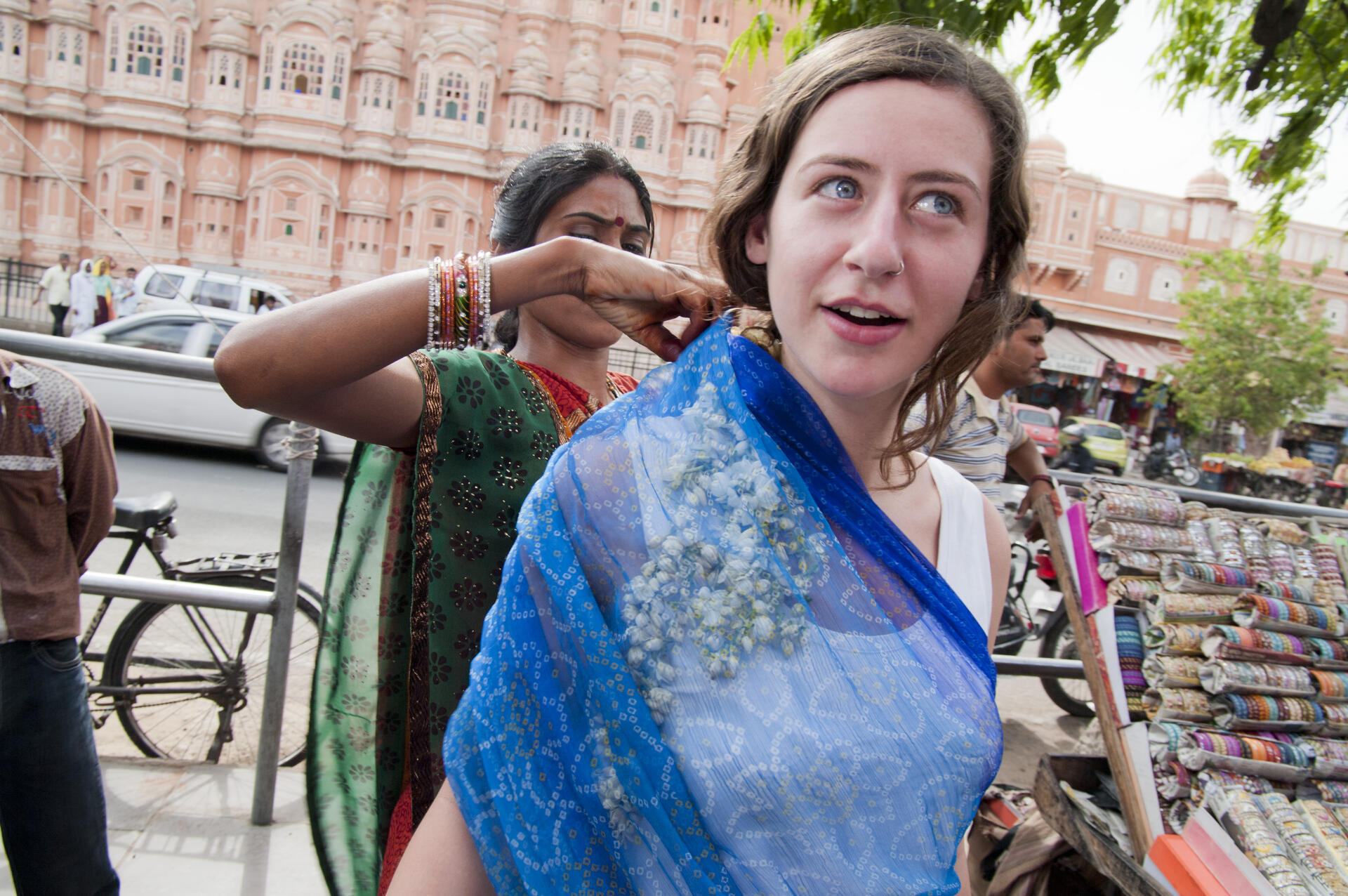
Hostels are one of the easiest ways to meet people. Zostel is the largest hostel chain, from Goa to remote Himalayan towns. goSTOPS has 30-plus properties, from Rishikesh and Pondicherry to offbeat spots like Kasol and Leh. The Hosteller is the more design-conscious option, with properties across India . Moustache runs across Rajasthan, Rishikesh, Varanasi, Goa and more – its heritage havelis in Jaisalmer and Jodhpur are worth booking for the setting alone. All four run a mix of mixed and female-only dorms, offer lockers for your valuables. For private rooms, Bloom Hotels is a reliable pick in Mumbai, Bengaluru, Delhi and Goa.
Not every corner of India is equally easy to navigate solo, especially early on, so it helps to start where the infrastructure is well established. Delhi, Agra and Jaipur – the Golden Triangle – are where most first trips begin: iconic sights, quick connections between cities, plenty of guides. Book the Solo-ish India, G Adventure’ 12-day solo-focused trip, which starts with an airport pickup through Women With Wheels – a project training women as professional drivers, so your first ride in the country is already in good hands. From there it's a walking tour through Old Delhi, Jaipur's Amber Fort with an optional cycle tour through the Pink City’s back streets, a leopard safari in Jhalana, a few quieter days in the small town of Bundi, and tigers in Ranthambore. Want more time and more ground? Essential India runs 15 days, adding Khajuraho’s carved temples and Varanasi, with a sunrise Ganges boat ride and an optional trip to Sarnath, where Buddha gave his first teaching. Both trips include a trip leader, plus accommodation, transport, most meals and plenty of activities built into each day.
Fancy a beach? Head to Goa – laid-back beach energy, a well-worn traveller trail, and both a livelier north and a quieter south, so it works whether you want company or just some downtime. Want something gentler? Rishikesh is where people go to slow down, full of yoga studios and riverside cafes. Hill towns like McLeod Ganj and Dharamshala in Himachal Pradesh are consistently rated among the most welcoming spots for first-timers, women included. And if wildlife’s on your list, Madhya Pradesh’s tiger reserves – Kanha, Bandhavgarh and Pench – are worth adding: safari jeeps are booked by the seat, so you won’t need a group of your own to go.
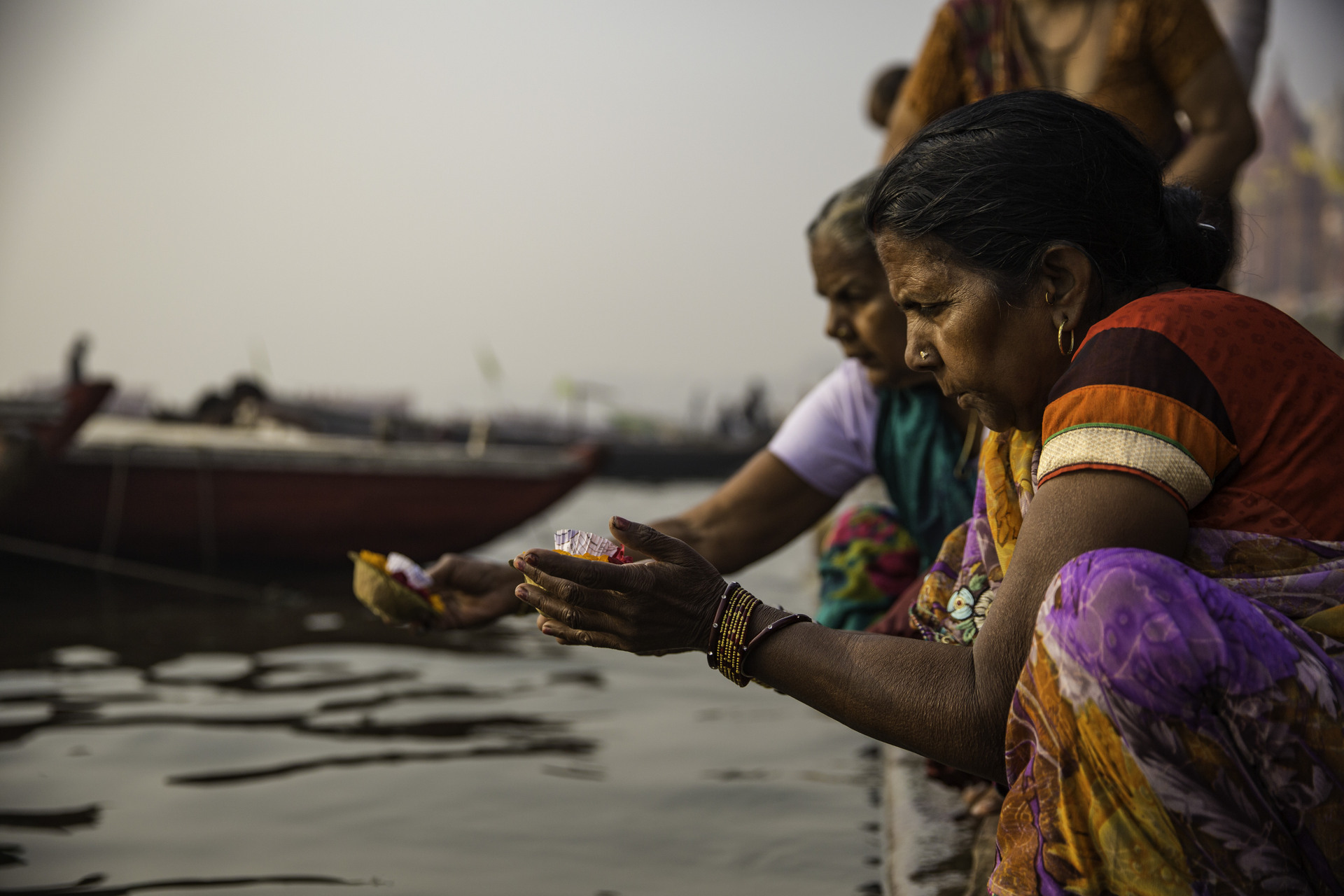
Down south, head to Kerala for the backwaters – slow boat rides through palm-lined canals and green paddy fields, a good few days away from the crowds. Pondicherry’s old French quarter is small and walkable, easy to explore on your own. And Hampi’s boulder-strewn ruins are worth it for the landscape alone – rent a bike, explore the temples and rocks at your own pace, and there’s a small hostel scene on the far side of the river if you want some company in the evenings.
Tip: Book a guided walking tour or food walk in your first day or two – it’s an easy way to get your bearings and get a feel for the city. Most major cities and towns have operators running these experiences, like 5 Senses Walk, which offer immersive cultural walks across India, and Storytrails, which offers story-based walking tours in parts of South India. Want to explore on your own? Download the government's Incredible India app – it lists officially approved guides by language, plus heritage sites, travel partners and other practical details.
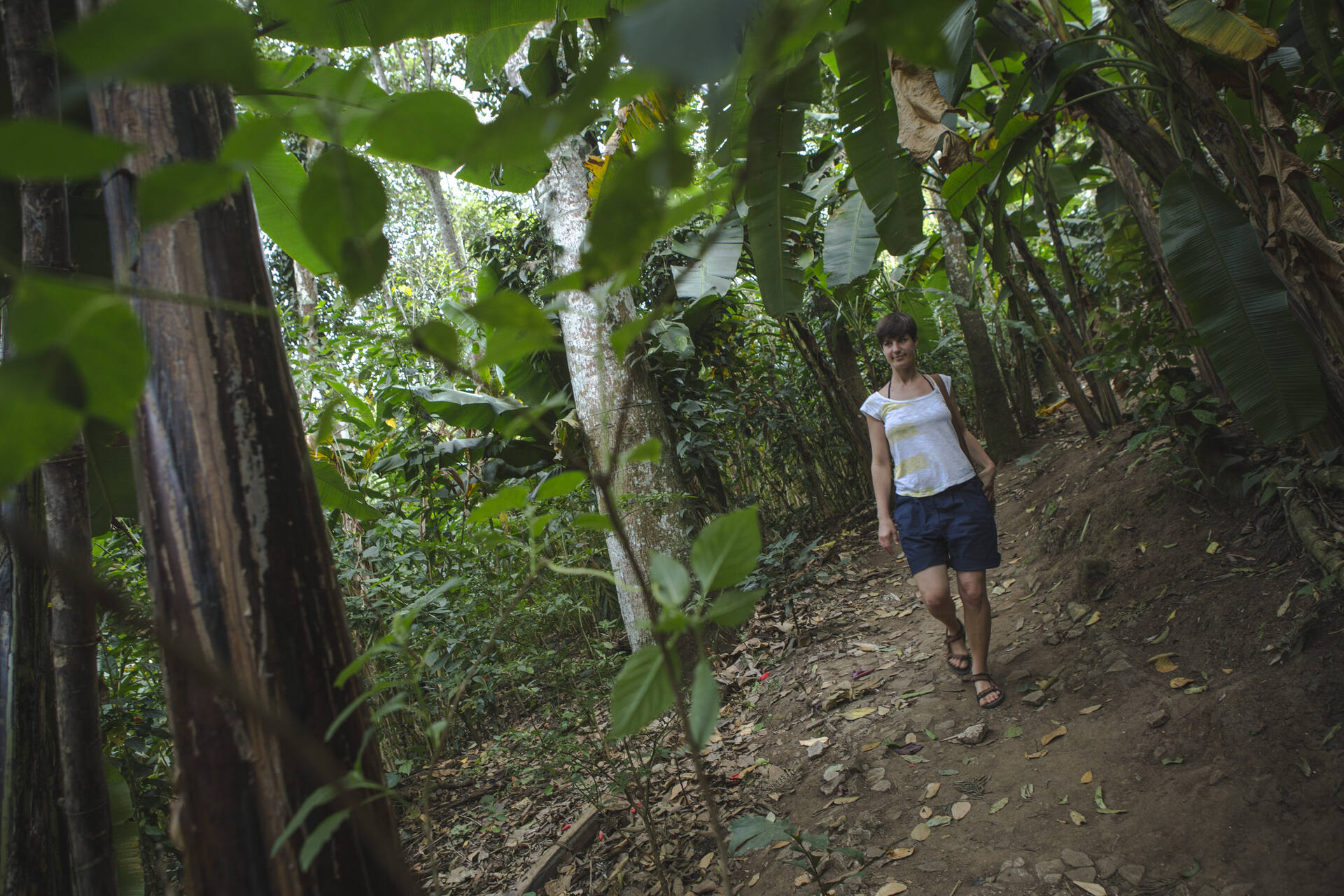
October through mid-March is the sweet spot for most of the country – cooler, drier, and a busy festival season, with Diwali in autumn and Holi in early March, so it’s worth timing a trip around if you want to experience India at its most colourful. That said, Delhi turns cold and foggy in December, while the Himalayan regions in north and northeastern India are best visited from May to September, once the winter snow clears the high passes. Avoid the monsoon (June-September) for a first trip, unless you’re chasing Kerala’s green season.
For a first trip, plan on ten to fifteen days at minimum. India isn’t a country you skim through – travel days eat up more time than you’d expect, distances are bigger than they look on a map, and it’s worth building in a slower day here and there rather than packing every day end to end.
Keep your passport, cash and cards close, and save digital copies of your documents somewhere you can reach offline. Share your itinerary with someone back home, and register with your embassy if travelling for an extended period. Save these numbers too: 112 for any emergency and 1363 for the tourist helpline; and download the Practo app before you need it – it lets you book a doctor or find a nearby clinic or hospital in major cities.
For day-to day spending, carry rupees – some smaller towns still run on cash – but it’s smart to set up UPI One World: a prepaid digital wallet for travellers without an Indian bank account, activated at kiosks in Delhi, Mumbai or Bengaluru airport arrivals with a passport and visa check. Independent apps like Cheq, Mony or NamasPay offer similar digital-only onboarding. Once loaded, you can scan-and-pay almost anywhere.
You’ll also want a few basics in your bag: loperamide, rehydration salts and a probiotic for the inevitable stomach adjustment.
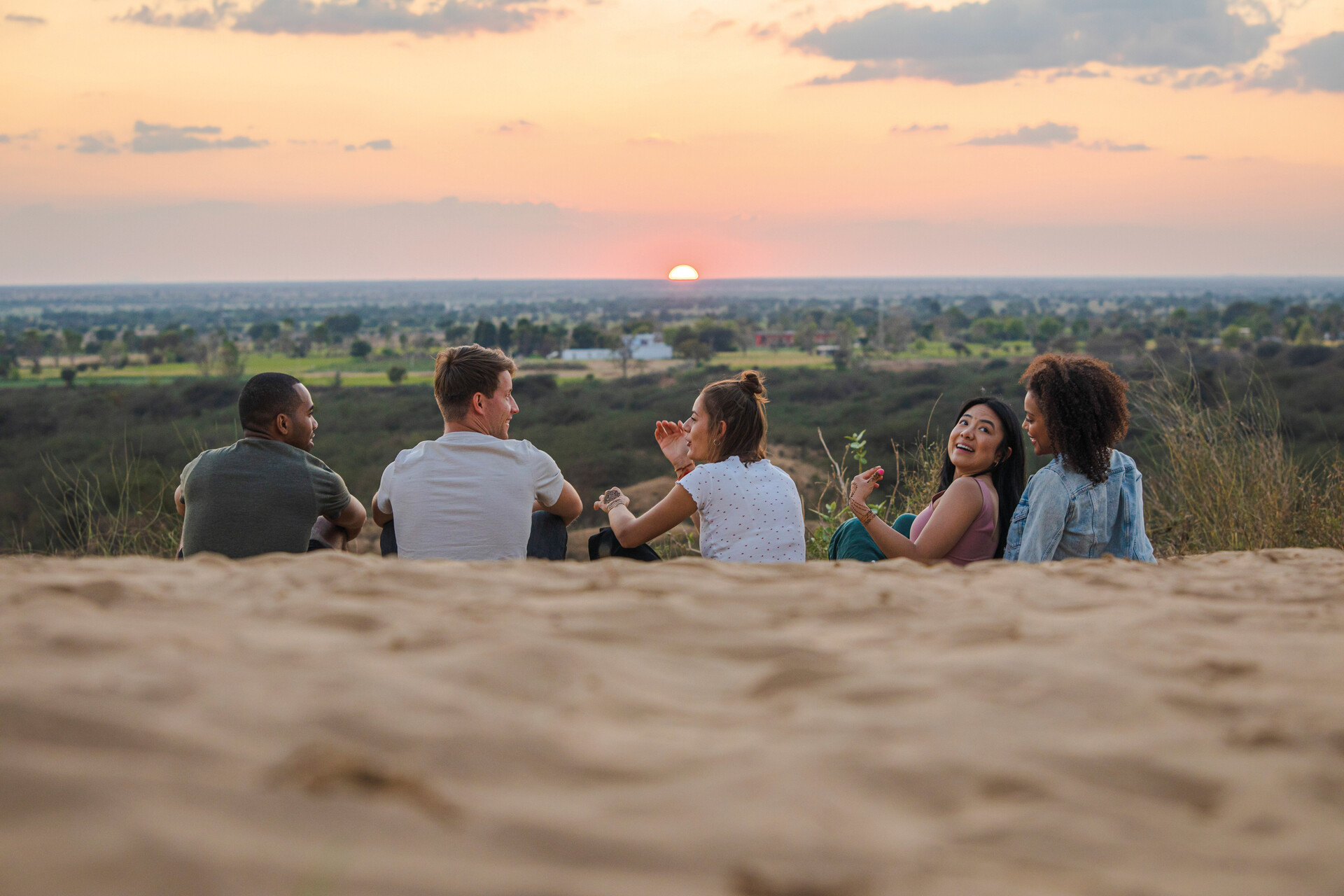
Look out for the reserved ladies’ coach on trains and the women-only carriage on the metro – most cities have both, and they’re worth using. In Jaipur, the Pink City Rickshaw Company goes a step further with autos driven entirely by women. If you want to meet a like-minded crew, clubs like Wegobond, WOW Club and Wander Womaniya run all-women group trips across the country – a safe way to travel. Beyond that, the same instincts that serve you well anywhere apply here too – avoid walking alone at night, dress modestly, and lean on your gut if something doesn't sit right. And it’s worth saving 181, the National Women’s Helpline, in your phone just in case.
India remains one of the most affordable destinations in the world. On a tight budget – hostel dorms, street food, local transport – expect to spend roughly USD $15–25 a day. A more comfortable trip, with a private room and a few paid activities or tours built in, runs closer to USD $40–70 a day. Day-to-day costs stay low too: a coffee is usually USD $2–5, a beer USD $3–6, and a nicer sit-down meal USD $20–50.