Kyrgyzstan Tours
Кыргызстанга кош келиңиз!
In the heart of Central Asia, Kyrgyzstan stuns with mountains, nomadic culture, and ancient history. Explore Bishkek, Burana Tower, Chong-Kemin’s gorges, and the scenic village of Tamga.

Best time to travel
Ancient nomad festivals
Oct for the Golden Eagle Festival: witness eagle hunting displays near Song-Kul.

Most popular time
Summer (Jun-Sep): prime for trekking, yurt stays, and alpine lake swims.

Most budget-friendly
Dec-Mar: cold but empty trails and low-cost homestays.

Favourite season
Jul & Aug see packed yurt camps around Issyk-Kul and Ala-Archa.

Culturally significant times
Nowruz (March 21), Independence Day (August 31), Eid al-Fitr, and Kurman Ait.
Things to do and see
Experiences that define Kyrgyzstan
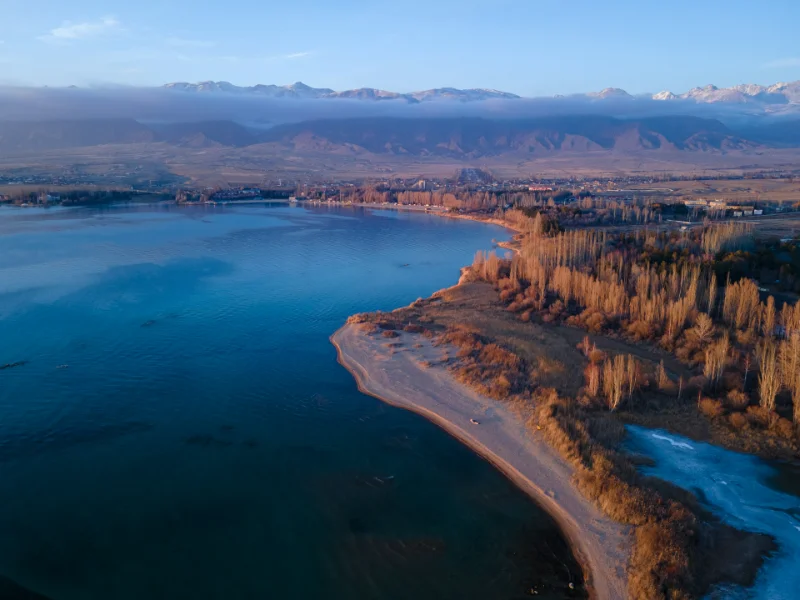
Swim in Issyk-Kul
Swim in Issyk-Kul—Kyrgyzstan’s alpine lake with clear water, beach time, and mountain views.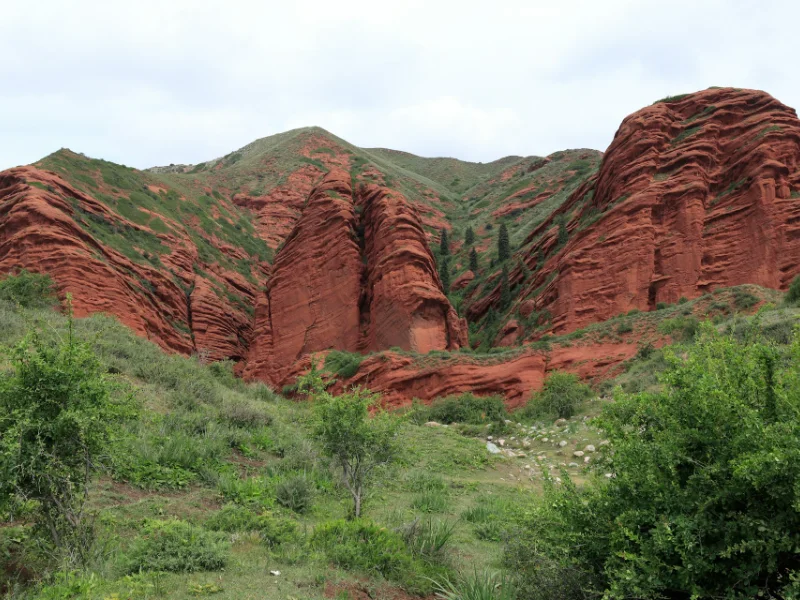
Jeti-Oguz Gorge hike
Hike Jeti-Ögüz Gorge—red sandstone cliffs, pine forests, and scenic trails in Kyrgyzstan.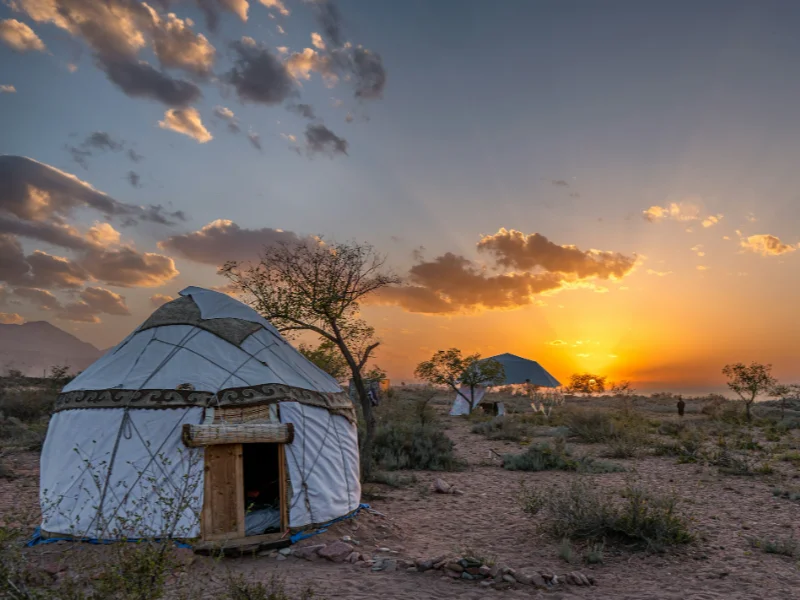
Sleeping in a yurt
Sleep in a yurt—cosy nomadic nights under big skies, surrounded by mountains and open steppe.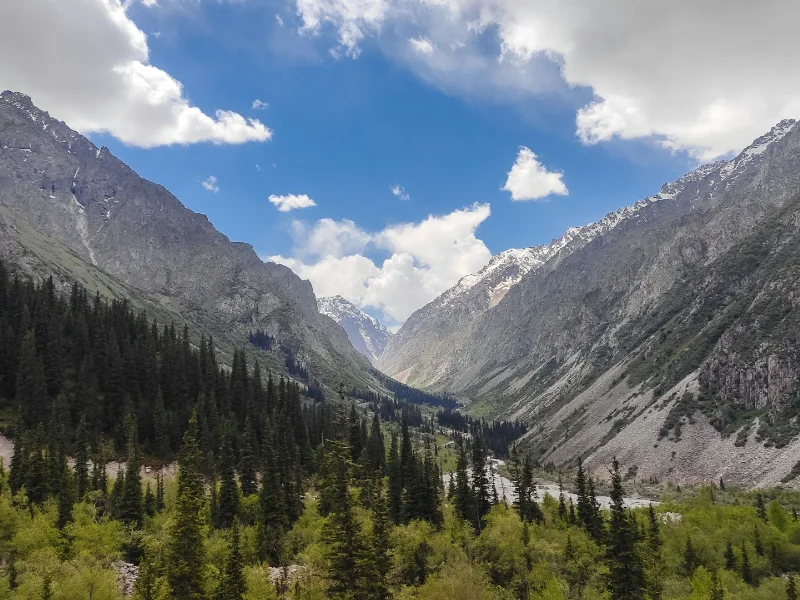
Ala-Archa Park trek
Trek Ala-Archa National Park—glacier views, alpine trails, and easy escapes from Bishkek, Kyrgyzstan.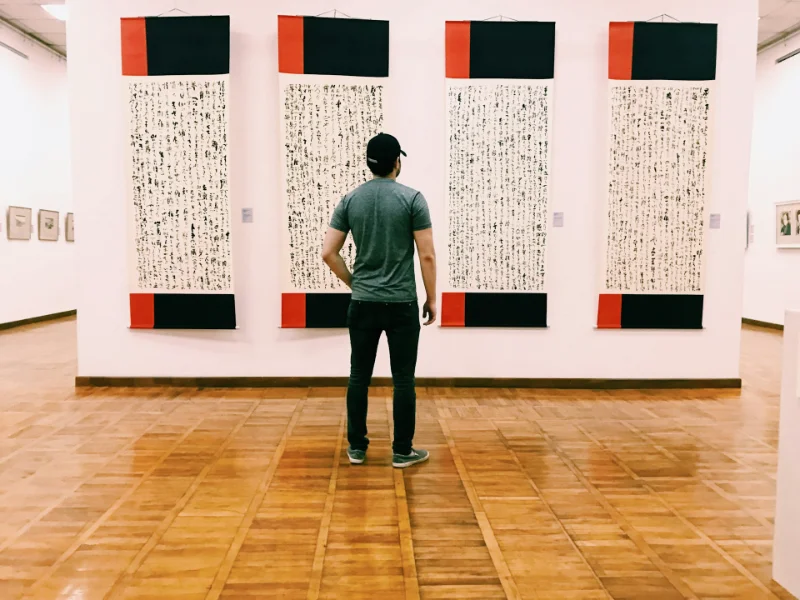
Bishkek art tour
Take a Bishkek art tour—Soviet-era murals, galleries, and modern culture in Kyrgyzstan’s capital.Need to know
Kyrgyzstan at a glance

Time Zone
Kyrgyzstan Time (UTC +6)

Climate
Varied with four distinct seasons

Currency
Kyrgyzstani Som (KGS)

Transportation
Marshrutkas (shared minibuses), taxis, and local buses

Local cuisine
Beshbarmak, manti dumplings, and samsa pastries

Languages Spoken
Kyrgyz, Russian
Frequently asked questions
Because planning should feel exciting, not exhausting.
Visa requirements may change, so for the most up to date information we recommend using our Entry Requirements tool. Alternatively, check the Kyrgyzstani embassy website in your country of departure.
Recommended vaccinations for Kyrgyzstan include hepatitis A, hepatitis B, typhoid, meningitis, polio, diphtheria, and rabies are strongly advised if you’re heading into rural areas and working with animals. Yellow fever is also required if you’re arriving from a country which has the disease. However, as advice often changes, you can check out our Entry Requirements tool for the most up-to-date details on vaccination requirements.
Kyrgyzstan has a continental climate with distinct seasons, which can vary significantly depending on the region, as the country is home to mountains, valleys, and plains. Summers (June to August) are generally hot, especially in the valleys and lower-altitude areas. In cities like Bishkek, Osh, and the Chui Valley, temperatures can range from 25 to 35°C (77 to 95°F), and in some areas, even hotter. Temperatures are much cooler in the mountains, ranging from 15 to 25°C (59 to 77°F) during the day and much colder at night. Winters (December to February) in Kyrgyzstan are cold, especially in the mountainous regions. In cities like Bishkek, temperatures can drop to -5 to -15°C (23 to 5°F) during the day, with even colder temperatures at night. In higher elevations, temperatures can fall well below -20°C (-4°F) or even lower. Spring (March to May) and Autumn (September to November) fall somewhere in between — expect variable temperatures throughout both.
The best time to visit Kyrgyzstan depends on the type of activities you're interested in, as the country offers different experiences throughout the year. However, most travellers find that the ideal times to visit are during Spring and Autumn, as the weather is mild, and outdoor activities like hiking and trekking are at their best. Summer is peak tourist season and the weather can be hot, though there are plenty of cultural festivals on at this time. Winter is the season for winter sports enthusiasts, with opportunities for snowshoeing, cross-country skiing, and winter hiking too.
In Kyrgyzstan, it’s not customary to tip service providers such as waiters, but it is very appreciated — depending on the service we recommend 5–10%. Tipping shows an expression of satisfaction with the people who have assisted you on your tour. Although it may not be customary to you, it is of considerable significance to the people who will take care of you during your travels. There are several times during the trip where there is opportunity to tip the local guides or drivers we use. You may do this individually, or your CEO will offer to collect the money and tip as a group. Recommendations for tipping drivers and local guides would range from USD $2–$3 per person per day depending on the quality and length of the service; ask your CEO for specific recommendations based on the circumstances and culture. Also at the end of each trip if you felt your G Adventures CEO did an outstanding job, tipping is appreciated. The amount is entirely a personal preference, however as a guideline USD $20–25 per person, per week can be used.
Internet access in Kyrgyzstan has improved significantly in recent years, especially in major cities, but it can still be a bit more limited and slower in more rural or remote areas. Wi-Fi in cafés, hotels, and restaurants is common, but the speed and reliability can vary. Platforms like Facebook, Instagram, Twitter, and YouTube are generally accessible, although internet restrictions may be imposed temporarily in times of national unrest.
Yes, ATMs are widely available throughout Kyrgyzstan, especially in major cities and larger towns. Most ATMs tend to accept international credit and debit cards (Visa and MasterCard). However, make sure your card is enabled for international use before traveling. It's best to carry sufficient cash if you're travelling to more remote regions, especially in places like the mountains or villages. Please note that you may be charged a transaction fee for withdrawals — check with your bank before you travel. If you’re heading out into rural areas, it’s a good idea to carry cash with you in case you can’t locate an ATM.
Kyrgyzstan is not widely regarded as LGBTQ+-friendly, and there are significant social and cultural challenges for LGBTQ+ individuals. The country is influenced by traditional values, which are often conservative, and LGBTQ+ issues are not openly discussed or accepted by the majority of the population. It’s best to be discreet when you’re in the country. As part of their commitment, all CEOs receive LGBTQ+ inclusion training so every traveller feels respected and welcomed on all of our tours. We commit to making our tours a safe and inclusive place for people to express their authentic selves without judgement, free from any discriminatory language or harassment. While travelling with G Adventures, all travellers must treat each other with dignity and respect to create an environment that is positive, safe, and where everyone feels welcome. You can find out more via our LGBTQ+ travel page.
Kyrgyzstan is a multilingual country with several languages spoken, reflecting its diverse cultural heritage. The two official languages are Kyrgyz and Russian, though other languages spoken here include Uzbek, Tatar, Dungan, and Kazakh.
In Kyrgyzstan, tap water quality can vary depending on the location, so we’d recommend just going with bottled water when you’re here, which is widely available and affordable. Please note however that all drinks provided on our tours are safe to drink (including drinks with ice), as well as the water in most hotels and restaurants visited on tour. If in doubt, please ask your CEO for further info.
Kyrgyzstan is generally considered safe for travelers, but, like any destination, there are some important things to keep in mind. Petty crime such as pickpocketing and bag-snatching can occur, particularly in crowded places like markets, buses, and tourist attractions. If you’re hiking in the mountains, you should be aware that the weather can change very quickly — make sure you’re well prepared. Political protests can also occur, but they generally don't target tourists. Stay informed and avoid protest areas. G Adventures takes all reasonable measures to ensure your safety and enjoyment while travelling with us. All of the included activities are properly vetted and regularly checked by us, and we take great care in choosing the right transportation, stays throughout your trip, and guides leading your tour. However, there are always inherent risks when travelling — you can find out more via our Travel Safety page.