Victoria Falls and Serengeti Adventure
From Livingstone to Nairobi
Victoria Falls and Serengeti Adventure
There are no departure dates currently available for the rest of this season. Some tours only run during parts of the year.
Please Contact Us to inquire about dates for next season, or to discuss other tour options.
Please Contact Us to inquire about dates for next season, or to discuss other tour options.
Tour Overview
Your adventure snapshot
Trip CodeDVN
FromLivingstone
ToNairobi
Countries VisitedTanzania, Zambia, Kenya, Malawi
Countries VisitedTanzania, Zambia, Kenya, Malawi
Inhale the fragrant perfume of Zanzibar’s spice plantations, hunt for the perfect snapshot of the ever-elusive Big Five, feel the thunder of Victoria Falls. Uncover the spectacular highlights of four African countries on this stellar 20-day adventure. Enjoy an intriguing combination of stunning wilderness and bright city lights from the comfort of our overland adventure vehicle (OAV) and camp under the big African sky for a unique perspective of this majestic land. With a unique itinerary that offers plenty of options, uncover all that this diverse region has to offer.Is this tour for me?
Travel Style
18-to-Thirtysomethings
Service Level
Camping
Physical Grading
3 - Average
Trip Type
Small Group
Age Requirement
12+
Under age 18 must be with an adultTrees for Days
Ripple Score
There are no departure dates currently available for the rest of this season. Some tours only run during parts of the year.
Please Contact Us to inquire about dates for next season, or to discuss other tour options.
Please Contact Us to inquire about dates for next season, or to discuss other tour options.
Dates & Availability
The countdown starts here
There are no departure dates currently available for the rest of this season. Some tours only run during parts of the year.
Please Contact Us to inquire about dates for next season, or to discuss other tour options.
Please Contact Us to inquire about dates for next season, or to discuss other tour options.
Frequently asked questions
All the A's to your Q's
Your Welcome Moment: Meet Your CEO and Group
Your Discover Moment: Nungwi. Local dinner experience. Night out at a local pub. Spice Plantation entrance and guided tour. 4-day Zanzibar excursion. Entrance and wildlife safari drives in Serengeti National Park and Ngorongoro Crater. All transport between destinations and to/from included activities.
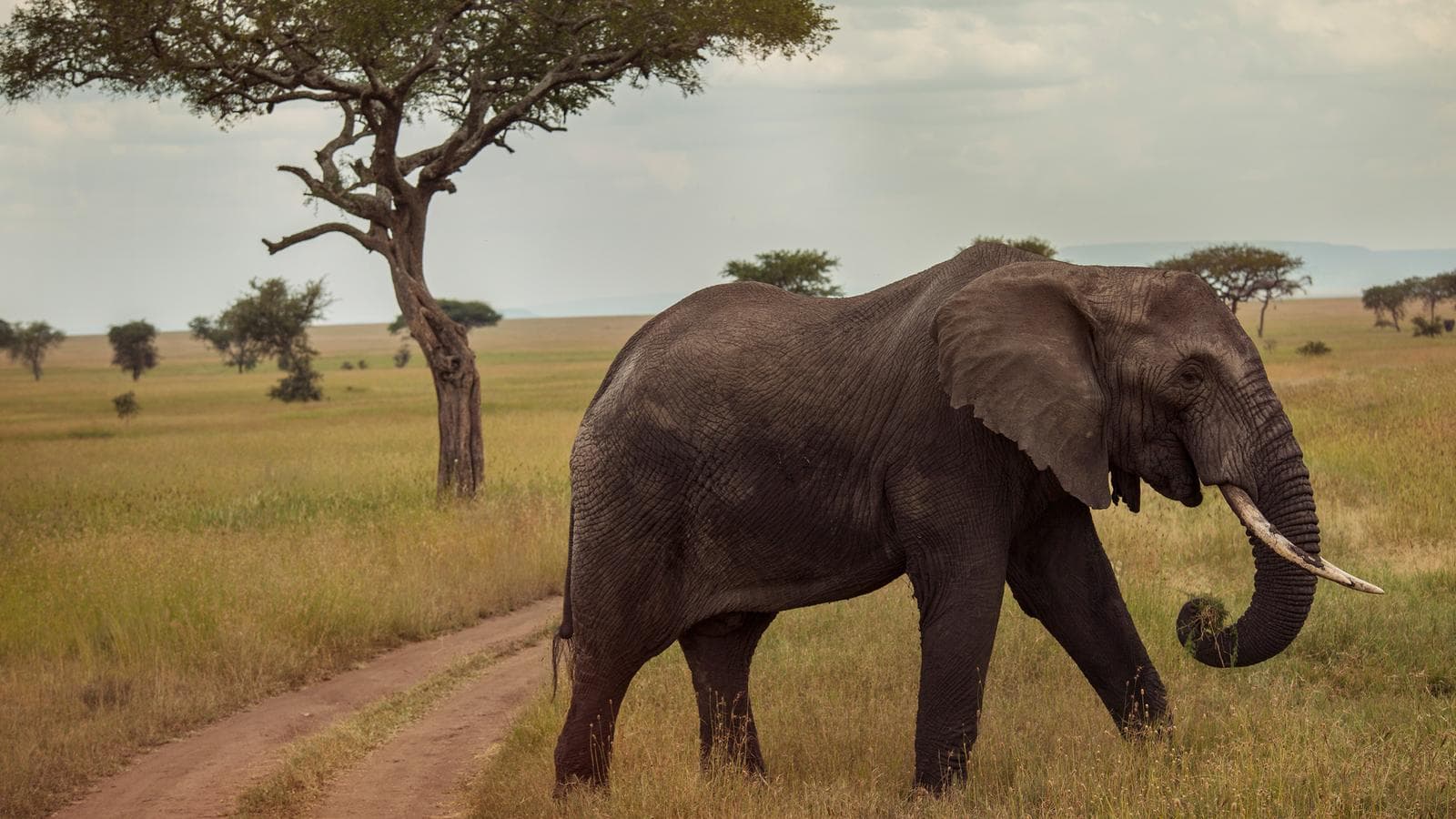
Track the Big Five across the Serengeti and the Ngorongoro Crater in agile 4x4 safari vehicles, chill out at Lake Malawi, explore Victoria Falls and Zanzibar.
The information in this trip details document has been compiled with care and is provided in good faith. However it is subject to change, and does not form part of the contract between the client and the operator. The itinerary featured is correct at time of printing. It may differ slightly to the one in the brochure. Occasionally our itineraries change as we make improvements that stem from past travellers, comments and our own research. Sometimes it can be a small change like adding an extra meal along the itinerary. Sometimes the change may result in us altering the tour for the coming year. Ultimately, our goal is to provide you with the most rewarding experience. Please note that our brochure is usually released in November each year. If you have booked from the previous brochure you may find there have been some changes to the itinerary.
VERY IMPORTANT: Please ensure that you print a final copy of your Trip Details to review a couple of days prior to travel, in case there have been changes that affect your plans.
While it is our intention to adhere to the route described below, there is a certain amount of flexibility built into the itinerary and on occasion it may be necessary, or desirable to make alterations. The itinerary is brief, as we never know exactly where our journey will take us. Due to our style of travel and the regions we visit, travel can be unpredictable. The Trip Details document is a general guide to the tour and region and any mention of specific destinations or wildlife is by no means a guarantee that they will be visited or encountered. Aboard expedition trips visits to research stations depend on final permission.
Additionally, any travel times listed are approximations only and subject to vary due to local circumstances.
Want less travel time and more Zanzibar? Consider booking our ‘Zanzibar Express’ upgrade which includes a flight an an extra night in Zanzibar.
1. Please note that this tour combines with other G Adventures tours. As such, the staff and some travel companions on your tour may have previously been traveling together with G Adventures, prior to Day 1 of your tour. Likewise, some staff and travel companions may be continuing together on another G Adventures tour, after your trip concludes.
2. This is not a physically demanding journey; however, travelling can be difficult, with long drives and poor road conditions at times. Despite this, most clients feel that the diversity of the African landscape, countries, culture and wildlife are all well worth the experience. We use a comfortable and safe customized safari truck for the long drives.
3. As of January 26th 2011 the Director General of the Zanzibar Commission for Tourism declared a valid Yellow Fever Certificate is required at all points of entry into Zanzibar. This includes the airport, seaport and other points of entry. Failure to provide the correct certification may result in an on the spot vaccination or $50 fine. Please check with your health expert for advice on Yellow Fever and other inoculations required for this area.
4. An essential part of your safari is participation. The group is usually divided into small groups and given different tasks which change on a day to day basis, from kitchen duty group (helping in prepare meals and clean up afterwards), the packing group (sets up all tables and chairs outside) and the cleaning group (which cleans the truck by emptying the rubbish bin and brooming). it is all part of your adventure and when everyone puts in a little effort the trip will run smoothly. Your CEOs will do all the meal preparation, but we do ask the clients to help with the washing up. Team spirit is part of the fun! All camping equipment (with the exception of your sleeping bag and pillow) is supplied. We supply dome tents and assembly/disassembly takes only 5 minutes. All tents have built-in insect nets. Mattresses are also available, which are approximately 4cm thick, warm and comfortable.
5. Sleeping bags can not be rented on any of our Africa overland or safari
6. LUGGAGE COMPLICATIONS: It occasionally happens that luggage on international flights into Cape Town, Livingstone or Johannesburg does not arrive. Please be aware that this may happen, especially if you have a tight connection in either of these centres, are flying with different airlines with a connection, have a last minute flight change or re-route, or fly from or connect through another African centre. Please be prepared and keep all important documentation and valuables on your person. As well we recommend a change of clothes in your hand luggage. If unfortunately this does happen, and your luggage does not arrive, you should be entitled to a limited initial compensation from your airline. In Southern Africa, the arrival of lost luggage normally takes between 10 and 48 hours after the initial plane’s arrival. The airlines technically should be responsible to forward your luggage to you, to your hotel or elsewhere in Southern Africa. You may find that your tour will begin, and you still have not received your luggage. When reporting your missing bag at the airport please provide the airline with the emergency telephone number of our local office in South Africa (+27 71 470 6928). Please do not give out any address (starting point hotel) as on most trips we do not stay long enough for the bag to arrive, the airline should phone our local office to arrange the delivery address. It is recommended that you purchase locally a few needed items, begin your tour. Your CEO or local representative will be able to help you organize this, and once your luggage is retrieved, it should be able to be forwarded to you – depending where you are. Please note that any costs that you may incur for luggage retrieval or sending luggage are not the responsibility of G Adventures, though we will always strive to assist you in any way possible, Please make sure to hand in the reference number of the bag and your flight details to your CEO in order to help with the tracing of the bag. You should always keep all receipts and documentation, and contact your airline or insurance provider for reimbursement.
7. Your CEO aims to provide you with the best service possible during your tour. They will be joining you in the back of the truck for a maximum of approximately 50% during driving, to answer questions and provide more information about the areas that you visit. They will spend the remainder of the driving time in front with the driver to enable them to make bookings, do planning and to fulfil other organizational requirements of the tour. During wildlife safari drives, your CEO will ensure to accompany you in the passenger area of the truck. This is of course because they have a lot of knowledge to share with you during these exciting wildlife safari drives. Please do not hesitate to ask your CEO any questions.
8. Please note that on all our Overland adventure vehicle (OAV) safaris there is a maximum of 22 people per vehicle.
9. VISAS. Please read the Visa section very carefully. Visas are your own responsibility. Always double check with the embassies what each countries requirement are.
10. Please note that if you have pre-night accommodations arranged, you will need to transfer from the Adventure tents (pre-night accommodation) to the dome tents (accommodation used for the camping portion of the tour) on Day 1. The reception at the Waterfront will be able to assist you to find your Truck and leader.
11. Depending on the lunar cycle, Ramadan will fall between June 18th and July 17th, 2015. Please note that Ramadan is a month of fasting observed by Muslims throughout the world, during which time the followers of Islam should not eat or drink between sunrise and sunset. In Zanzibar and other Muslim areas in Africa, it is important to note that there may be some limitations to services and disruptions to schedules during Ramadan. Generally our tours still operate effectively during this period and food is available to non-muslims throughout the day. It is important to display increased cultural sensitivity during Ramadan, particularly in Zanizbar. Please wear loose fitting clothes, that cover knees and shoulders, and try to avoid eating, drinking or smoking in public out of respect for those who can't at that time.
12. Looking to add to your experience? Check out our Theme Packs! Specially designed for travellers with unique interests, theme packs are optional add-ons to your G adventures trip that make your adventure more you-centric. Theme Packs must be booked prior to departure, please see details in our optional activities field and ask you sales CEO.
On this tour, you will be accompanied by two Chief Experience Officers (CEOs). The Chief Experience Officers (CEOs) will be the group manager and leader, cook and driver. They will provide information on the places where we are travelling, offer suggestions for things to do and see, and introduce you to our local friends. They will take care of the small things so you can concentrate on enjoying your adventure.
All of our CEOs in southern and East Africa are experienced group leaders, with a broad knowledge base of the region’s history, cultures, and wildlife. Your leader will be from either southern or East Africa depending on which part of the tour you are on.
All of our overland adventure vehicle (OAV) drivers are experienced in the routes travelled, and highly skilled in dealing with different terrains. All of our cooks will organize and lead the meal preparation, and have experience in cooking a variety of local and international dishes for large groups.
In the Serengeti and Ngorongoro Crater to round out the team, along with your CEO, you will be accompanied by a local safari crew consisting of an expert driver/guide and camp cook. Your driver/guide is skilled and experienced driver and a certified safari guide, and is an integral part of the team. As well, your cook will prepare the camp meals to add some further local flavour to the trip.
We also use local guides for some included activities where we think more specific knowledge will add to the enjoyment of the places we are visiting.
Max 22, avg 18.
19 breakfasts, 14 lunches, 13 dinners
As mentioned above, most of the meals on this tour are included in the tour price. When a meal is not included, this is because there are often many options available - we would like to give you the opportunity to explore a bit and test the local cuisine yourself. In these cases, your CEO will be able to suggest some good local restaurants or options for you to choose from.
All included meals will be prepared from fresh local produce. The majority of the shopping for foodstuffs will be done before the trip departs, and fresh goods, such as meats, fruits, vegetables, and dairy products, will be bought en route during the trip from supermarkets, local shops and markets. Breakfasts will generally consist of breads and cereals, if time allows a warm breakfast may be prepared. Many lunches will be provided en-route and will be light meals such as sandwiches and/or salads. All evening meals will be freshly-prepared hot meals, and will consist of a variety of continental and local dishes.
Our cook will organize the meal preparation and lead the way here, but will prepare a duty schedule for ensuring a fair, rotating participation from you and your group members in the meal preparation and dish washing duties.
Vegetarian meals and other dietary requirements need to be specified prior to arrival. Please note all bottled drinking water will be at your own expense.
Overland adventure vehicle (OAV), 4x4 safari vehicle, walking, ferry.
This trip is done a combination of vehicles - a larger 24 seat overland vehicle for most of the trip, and in private 6-7 seat safari vehicles for the safari section in Tanzania. Both styles of vehicles have their advantages - the overland adventure vehicle (OAV) allows the entire group to travel together, and sits higher, great for wildlife viewing and to enjoy the scenic landscape.
The smaller safari vehicles will be used when the group is in the Serengeti and Ngorongoro Crater. With sliding windows and a large pop-up roofs, an open 360-degree view of area, great for wildlife viewing. If there is a large group, 2-3 vehicles will be used, and the group will be split up. This style of travel is by no means luxurious, but the seats are comfortable and having our own private vehicles allow us the flexibility of making stops when needed, and to stay and watch that crouching lion prepare for an attack.
Road conditions can run the full gamut from new to being in very poor condition. This style of travel is by no mean luxury, but it does allow us the flexibility of making stops when needed, and reaching some out-of-the way parts of East Africa where the traditional safari crowd would not dare to go.
Here’s a quick look at the well-equipped G Adventures overland adventure vehicle (OAV):
- Storage for main luggage in a compartment under the seating area (accessed from the outside of the truck). Day packs can be stored at your feet (there is plenty of room).
- Onboard safety box(es) for valuables.
- Front view windows
- Large sliding windows, great for wildlife viewing
- Fully equipped retractable kitchen
- Intercom between seating area and driver
- Inverter for battery charging (South African plug - 220-240V)
Please note that our trucks do not have on-board bathrooms. Nor do they have seats that recline as often reclining seats will break, and thus you will have some seats that recline and some that don't.
This is not a physically demanding journey; however, travelling can be difficult, with long drives and poor road conditions at times. Please take note of the travel times and distances in the above itinerary, and consider that this is often on poor quality, bumpy roads. Despite this, most clients feel that the diversity of the African landscape, culture and wildlife are all well worth the experience.
We believe single travellers should not have to pay more to travel so our group trips are designed for shared accommodation and do not involve a single supplement. Single travellers joining group trips are paired in twin or multi-share accommodation with someone of the same sex for the duration of the trip. Some of our Independent trips are designed differently and single travellers on these itineraries must pay the single trip price.
Participation camping (13 nts), full service camping (2 nts), simple hotel (4 nts).
Please note that if you have booked the "My Own Room" option for this tour, you will receive your own single room for all night stops
Camping in Africa is truly an adventure. You will be able to get off the beaten track to get a first-hand experience of the beautiful wilderness and nature. While camping, we stay at designated campsites in national parks and outside towns. Campsite facilities in southern Africa are generally good, but can be basic in certain places. There are generally small restaurants and/or bars, washing facilities and occasionally internet available.
The camps have flush toilets (with some exceptions), and showers at some camps are outdoors, having simple enclosures for privacy. Additionally, warm water is available at most sites, but it is not guaranteed to always be warm when you take your shower; the warm water may be used up by others who also use the camp. We usually set-up camp within close proximity to the toilet facilities, though occasionally to reach them you may to walk a short distance.
All camping equipment (with the exception of your sleeping bag and pillow) is supplied, including camp mattresses, which are comfortable. We supply dome tents and assembly/disassembly will take you only 5 minutes. They are good quality, durable, industry-standard 2-person safari canvas tents. Please note that most adults will not be able to fully stand up inside the tents, though most travellers find these more than adequate, as they have a base area of approximately 4 square meters. These tents are regularly treated with a waterproofing agent, but under certain rainy conditions, the tent fabric may become saturated to the point where seepage or leakage may occur. All tents have built-in mesh insect netting on the windows and doors.
We travel with our own portable camp chairs with a comfortable back-rest, and we utilize our own cooking equipment to provide the group good quality camp meals.
In camping within the national parks and conservation areas, some camp sites are enclosed for keeping the resident wildlife out. Other camps are open to the natural environment – care must be taken, especially at night, when a torch/flashlight is recommended when walking around the camp area.
The campsite in Serengeti National Park is extremely basic, with no electricity, simple bathing facilities (no showers), and both seated and squat flushing toilets. While camping at the Ngorongoro Crater rim, there is very limited electricity, occasionally warm showers, and squat flushing toilets. The campsites for the Serengeti and Ngorongoro Crater are open sites, where the wildlife can wander into the area, but they are safe.
Despite the challenge that a few days “roughing it” may pose to some, the experience of being that close to nature, camping under the African stars, and seeing incredible wildlife at your tent door-step is not just gratifying but ultimately an experience of a lifetime.
Guesthouse/Lodge/Bugalows
3 nights on Zanzibar Island we will stay in bungalows that have basic twin share rooms with en suite bathrooms.
For details of your joining hotel please refer to your tour voucher, G Account, the G Adventures App or contact your travel agent.
On arrival into Livingstone an arrival transfer is not included. Please make your way to the joining hotel. A brief departure meeting will be held in the hotel restaurant area in the evening on Day 1 of your tour. Upon arrival look for information from your CEO regarding meeting time and also the rest of the tour. After the meeting, we will set up camp and spend two days exploring the majestic Victoria Falls.
Upon arrival at the Zambezi Waterfront, please go to reception. There you will see our G Adventures welcome desk. Brenda will assist you with checking in and meeting up with your CEO and fellow travellers. She will also be able to assist you in making any activity bookings.
Pre-arranged transfers with G Adventures:
You will be approached by every transfer person and asked your name. Do not volunteer this information. The transfer person should have a sign with G Adventures and the hotel name on it (at times the sign will have your name but not the hotel). Ask him/her who they are waiting for (or which hotel they are taking you to) and once they confirm, present your passport for proof of identity.
Taxis:
When arriving at the international terminal, depart the arrival hall and outside you will find taxis to town. It is approximately 5km from the city centre and takes about 20 minutes (Cost is about $15usd for a taxi).
We don't expect any problems, and nor should you, but if for any reason you are unable to commence your trip as scheduled, as soon as possible please contact your starting point hotel, requesting that you speak to or leave a message for your CEO (if you are not on a group tour please refer to the emergency contact details provided in this dossier). If you are unable to get in touch with your leader, please refer to our emergency contact details. If you have pre-booked an airport transfer and have not made contact with our representative within 30 minutes of clearing customs and immigration, we recommend that you make your own way to the Starting Point hotel, following the Joining Instructions. Please apply to your travel agent on your return for a refund of the transfer cost if this occurs.
Should you need to contact us during a situation of dire need, it is best to first call either the G Adventures Local Reprsentative (if one is listed below) or our G Adventures Local Office. If for any reason you do not receive an immediate answer, please leave a detailed message and contact information, so they may return your call and assist you as soon as possible.
AIRPORT TRANSFER
If you have purchased an arrival through G Adventures or if an arrival transfer is included in the cost of your tour, please note that:
Your arrival transfer has been arranged based on flight information provided to us. If you are advised of a flight schedule change within 48 hours of your scheduled arrival time, we will do our best to rearrange your arrival transfer however we cannot guarantee this. If your arrival transfer does not arrive within 30 minutes after you have exited the arrivals area please take a taxi to your start point hotel.
EMERGENCY CONTACT NUMBERS
G Adventures Local Representative (South Africa)
From outside South Africa: +27 82 556 4562
From within South Africa: 082 556 4562
Mr Salum Muhidin: +255 773 258 773 (Operations Manager)
Mr Suleiman Chasama: +255 777 414 196 or +255 784 414 196 (Managing Director)
If you are unable for any reason to contact our local office, please call the numbers listed below which will connect you directly with our Sales team who will happily assist you. Hours of operation by region can be found here.
Toll-free, North America only: 1 888 800 4100
Calls from UK: 0344 272 0000
Calls from Germany: 0800 365 1000
Calls from Australia: 1 300 796 618
Calls from New Zealand: 0800 333 307
Outside North America, Australia, New Zealand, Germany and the UK: +1 416 260 0999
The tour ends upon arrival into Nairobi, in the late afternoon, at the Hotel Boulevard in central Nairobi. In order to avoid any necessary issues with timing, please book your outgoing flight from Nairobi from 21:00 hrs or later.
There is no included accommodation for this night in Nairobi. You may choose to pre-reserve post-tour accommodation at through G Adventures.
You will be on the move a lot, so our advice is to pack as lightly as possible. Your baggage should be clearly labelled and restricted to one soft compact suitcase, sports bag, or backpack, no larger than 30cm(height) x 30cm(width) x 60cm(length), maximum 15kg, plus a daypack. You will need a daypack big enough for a change of clothes, towel, toiletries etc to take with on the Serengeti excursion, but still small enough to fit into the smaller vehicles used for the excuresion. Due to limited space in the wildlife-drive vehicles, big backpacks can unfortunately not be taken with to the Serengeti. Luggage limits on airlines are strictly enforced and space on vehicles is limited. Porters are not often available, so be prepared to carry your own bags.
For our camping style tours you will need to provide your own sleeping bag, small pillow and sleeping sheet (if you would like). We provide the tent and the sleeping pads.
Please note that the seasons in Africa is quite extreme. Winters (especially South Africa, Namibia and Botswana) can be really cold and summers will be really hot.
If you travel during winter months(May to October) please ensure that you bring warm clothing and a suitable sleeping bag.
A set of smart casual clothes is also advisable.
Additional Items:
• Sleeping bag (required)
Cold Weather:
• Long-sleeved shirts or sweater
• Scarf
• Warm gloves
• Warm hat
• Warm layers
• Warm waterproof jacket
Documents:
• Flight info (required) (Printouts of e-tickets may be required at the border)
• Insurance info (required) (With photocopies)
• Passport (required) (With photocopies)
• Vouchers and pre-departure information (required)
• Visas or vaccination certificates (With photocopies)
Essentials:
• Toiletries (required) (Shampoo, bodywash, soap, etc.)
• Binoculars (optional)
• Camera (With extra memory cards and batteries)
• Cash, credit and debit cards
• Day pack (Used for daily excursions or short overnights)
• Ear plugs
• First-aid kit (should contain lip balm with sunscreen, sunscreen, whistle, Aspirin, Ibuprofen, bandaids/plasters, tape, anti-histamines, antibacterial gel/wipes, antiseptic cream, Imodium or similar tablets for mild cases of diarrhea, rehydration powder, water purification tablets or drops, insect repellent, sewing kit, extra prescription drugs you may be taking)
• Flashlight/torch (Headlamps are ideal)
• Fleece top/sweater
• Footwear
• Hat
• Headphones (Noise-cancelling recommended)
• Locks for bags
• Long pants/jeans
• Moneybelt
• Outlet adapter
• Personal entertainment (Reading and writing materials, cards, music player, etc.)
• Reusable water bottle
• Shirts/t-shirts
• Sleepwear
• Small travel towel
• Sunglasses
• Swimwear
• Watch and alarm clock
• Waterproof backpack cover
• Windproof rain jacket
Warm Weather:
• Sandals/flip-flops
• Shorts/skirts (Longer shorts/skirts are recommended)
• Sturdy water shoes/sandals
• Sun hat/bandana
• Swimwear
Note: Seasons in Southern Africa are quite extreme. Winters can be really cold and summers will be really hot. If you travel during winter months (May to October) please ensure that you bring warm clothing and a suitable sleeping bag.
Laundry can be done at most campsites by the local women. The price can be different from area to area. It might be better to bring some eco-friendly soap with you on tour, as well as some clothes pegs, and do your own washing.
All countries require a valid passport (with a minimum 6 months validity). Contact your local embassy or consulate for the most up-to-date visa requirements, or see your travel agent. It is your own responsibility to have the correct travel documentation. Visa requirements for your trip will vary depending on where you are from and where you are going. We keep the following information up to date as far as possible, but rules do change and sometimes without warning. While we provide the following information in good faith, it is vital that you check the information yourself and understand that you are fully responsible for your own visa requirements.
Visa information specific to your destination and nationality can be found in our Important Pre-Departure Information page here
East Africa Tourist Visa
An East Africa Tourist Visa allows the holder to move freely between Kenya, Rwanda and Uganda with only one Visa, and is valid for a period of 90 days. It also acts as a multiple entry Visa, so if you leave any of the above countries, you do not need a new Visa to re-enter (provided it is within the 90 day validity period). These need to be applied for in advance, and you should contact the foreign Embassy (of the country you will be entering through) for more details. The cost is 100USD.
Please see below for more information:
http://www.visiteastafrica.org/visa/
--------------
Zambia
***Please be sure to visit http://www.zambiaimmigration.gov.zm to determine if your nationality requires a Visa, can purchase one upon arrival or must apply for one in advance.
Note that Zambia and Zimbabwe have come out with a UNIVISA. This visa allows holders to cross back and forth between Zambia and Zimbabwe as many times as they would like within a 30-day period (giving the traveller the ability to see Victoria Falls from both sides). These visas can be purchased at Livingstone and Lusaka airports and the border posts at Victoria Falls and Kazangula for 50USD.
We recommend G Adventures’ travellers purchase this visa rather than a single entry Zambia visa as the single entry is a minimum of 50USD. The UNIVISA will allow travel between the Zambia and Zimbabwe side of Victoria Falls with relative ease and no additional visa costs.
Information below is in regards to Zambian Visas only.
http://www.zambiaimmigration.gov.zm/index.php?option=com_content&view=article&id=93&Itemid=118
http://www.zambiaimmigration.gov.zm/index.php?option=com_content&view=article&id=92&Itemid=117
Most nationals can purchase their visas upon arrival. Some nationals do have to obtain a visa before arriving in Lusaka such as Greek, Turkish, Indian, Chinese. But please double check with your agent and/or closest embassy.
Single Entry- US $50.
Double Entry- US $80
Multiple Entry- US $80
Malawi
http://www.malawiembassy-dc.org/index.php?page=visa-information
http://www.malawitourism.com/pages/content/index.asp?PageID=77
Please be aware that some travellers may require a VISA before arriving in Malawi. To determine whether you require a VISA prior to arrival check the information at the following link: http://malawi.com.au/?page_id=73. To avoid unnecessary delays, or the possibility of being denied entry, please ensure that you have a VISA prior to arrival if one is required.
Tanzania
You can get a visa on arrival at the airport or at any entry point into Tanzania. But please double check your visa requirements before departure.
No Visa is required for nationals of the following countries:
Botswana, Gambia, Ghana, Hong Kong, Kenya, Leshoto, Malawi, Malaysia, Mozambique, Namibia, Swaziland, Uganda, Zambia and Zimbabwe.
Referred Visas are required for nationals of the following countries:
The referred visa is one that requires special clearance or permission from the Director of Immigration Services in Dar es Salaam or the Principal Immigration Officer in Zanzibar.
Afghanistan, Abkhazia, Azerbaijan, Bangladesh, Chad, Djibouti, Ethiopia, Equiatorial Guinea, Eritrea, Lebanon, Mali, Mauritania, Morocco, Niger, Palestine, Refugees and Stateless individuals, Senegal, Somalia, Sierra Leone, Tajikistan, Turkmenistan, Uzbekistan, Kazakhstan, Kyrgyzten, and Sri Lanka.
IT IS EMPHASIZED THAT NATIONALS AND PERSONS OF THE MENTIONED COUNTRIES AND/OR CATEGORIES ABOVE MAY NOT BE ALLOWED ENTRY INTO TANZANIA WITHOUT BEING IN POSSESSION OF REFERRED VISAS.
Visa Costs – Please use only as a guideline
US Citizens ONLY: US$100.00. This fee will apply to single and all multiple entry visas.
Non-US Citizens: Visa fees are US$50.00 for single entry, and US$100.00 for double entry
Kenya
The Kenyan Government has introduced an electronic visa process with effect from July 2nd. Travellers wishing to enter Kenya need to visit www.ecitizen.go.ke and follow instructions for processing their electronic visa in advance of their arrival into Kenya. As this measure was introduced with little advance notice, there is a grace period where travellers may continue to apply upon arrival into Kenya for their visa. You can obtain a visa for US$50. This visa is normally valid for up to 3 months with multiple entries/exits permitted to Uganda and Tanzania only. Please note that Kenya is now strictly enforcing a "blank pages, condition of entry". All those requiring a visa on arrival must have at least two blank pages available in their passports. Failure to meet this requirement could mean that entry will be refused.
Border crossing from Kenya to Tanzania is through Tarime Border Post, and from Tanzania to Kenya at Namanga Border Post
Persons aged 16 years and below will require a visa to enter Kenya.
This information is accurate at the time of writing, and please contact your local embassy or consulate for the most up-to-date visa requirements and costs, regarding these, and the other countries visited, or see your travel agent. It is your responsibility to have the correct travel documentation.
REGIONAL INFORMATION
ZAMBIA
Full country name: Zambia
Area: 752,615km2 (17th largest in Africa)
Population: 10.4 million
Capital city: Lusaka
Largest Towns: Lusaka, Ndola, Livingstone, Kabwe, Kitwe.
People: Bemba, Tonga, Nyanja, Ngoni, Lozi plus many other different groups as well as Colonial ex-pats and people of Asian descent
Official Language: English
Other Languages: Bemba, Tonga, Nyanja, Lozi
Religion: Christian, ZCC and Islam
Government: Multiparty parliamentary democracy
President: Levy Mwanawasa
Currency: Kwacha
Major industries: Agriculture (mainly subsistence farming), mining, tourism
• Formally called Northern Rhodesia, Zambia gained its independence from colonial Great Britain in 1964.
• By the end of 1970, Zambia has become one of the poorest countries in the world due to corruption, mismanagement of the economy and a fall in the world copper price.
• In the 1990s Kuanda, the president since independence, was forced to amend the constitution, legalizing opposition parties and setting full elections in 1991. They were defeated by Frederick Chiluba. However, Zambia’s situation has not improved.
• The country has three distinct seasons: cool and dry from May to August, hot and dry in September and October and rainy between November and April.
• The majority of the population are subsistence farmers and there are also some large commercial farms growing sugar cane.
INTERESTING FACTS
1. Zambia is the fourth-largest supplier of copper in the world and the leading producer of cobalt. Combined the mining of these two minerals accounts for 75% of Zambia’s foreign exchange and 5% of employment in the country.
2. There are 73 officially recognized ethnic groups living within Zambia’s borders, each with their own culture and language.
3. Unlike many African countries, Zambia’s borders do not adhere to any logical language or tribal boundaries.
4. Unlike neighbouring Botswana the Zambian government does not have a comprehensive anti-poaching policy and poaching remains a major problem facing Zambia’s wildlife.
5. Approx 750 different species of bird have been recorded in Zambia. 6. The Victoria Falls on the Zambian side is known as “Mosi oa Tunya” (the smoke that thunders)
MALAWI
Full country name: Republic of Malawi
Area: 118,500km2 (35 that)
Population: 10.4 million
Capital city: Lilongwe (pop 260,000)
People: Chewa, Nyanja, Tumbuko, Yao, Lomwe, Sena, Tonga, Ngoni, Ngonde, Asian, European
Languages: English, Chichewa, regional languages
Religion: 55% Protestant, 20% Roman Catholic, 20% Muslim, traditional indigenous beliefs
Government: Multi-party democracy
President: Bakili Muluzi
Major industries: Tea, tobacco, sugar, sawmill products, cement, consumer goods, tobacco, sugarcane, cotton, tea, corn, potatoes, cassava (tapioca), sorghum, pulses, cattle, goats
Major trading partners: US, South Africa, Germany, Japan, Zimbabwe, UK Currency: Kwacha (K)
TANZANIA
Full country name: United Republic of Tanzania (Jamhuri ya Muungano wa Tanzania)
Area: 945,087 km2
Population: 38,329,000-July 2005 est (34,443,603-2002 census)
Capital city: Dodoma
People: 99% native African (over 100 tribes), 1% Asian, European and Arabic
Languages Swahili, English, indigenous.
Religion: 40% Christian, 33% Muslim, 20% indigenous beliefs
Government: Republic (multi-party state)
President: Benjamin William Mkapa
Major industries: Tobacco, sugar, sisal, diamond and gold mining, oil refining, cement, tourism
Major trading partners: India, Germany, Japan, Malaysia, Rwanda, the Netherlands, South Africa, Kenya, U.K., Saudi Arabia, China Currency: Tanzanian shilling
TANZANIA - Interesting Facts
• The name is name made up from an amalgamation of TANganyika and ZANzibar.
• Tanzania is the largest country in East Africa (although not in Africa as a whole, the Sudan is 3 times larger); it’s landmass covering an area of just over 945,087 sq. km (including Zanzibar).
- This makes Tanzania about the size of France, Germany and Switzerland combined; 3 times the size of the entire British Isles or one-tenth the size of the whole of the USA.
- Tanzania’s population at the last official census was 31.3 million, with approximately one third being classified as “urban”.
- Agriculture forms roughly half of GDP and agriproducts (e.g.: coffee, tea, tobacco, cashew nut, sisal, cotton) some 75% of export earnings. • Dodoma, in central Tanzania, is the political capital of the country although Dar es Salaam is the effective trading and business capital, with its safe harbour (""Dar es Salaam” means “Haven of Peace”), international airport and population of some 1.75million.
KENYA
Full country name: Republic of Kenya (Jamhuri Ya Kenya)
Area: 580,367 km2
Population: 34,256,000-July 2005 est. (31,138,735- 2002 Census)
Capital city: Nairobi
People: 22% Kikuyu, 14% Luhya, 13% Luo, 12% Kalenjin, 11% Kamba, 6% Kisii, 6% Meru, 16% other
Languages: English, Swahili, indigenous.
Religion: 35% Protestant, 30% Roman Catholic, 30% Muslim, 5% Animist
Government: Republic (multiparty state)
President: Uhuru Kenyatta
Major industries: small-scale consumer goods (plastic, furniture, beer, batteries, textiles, flour), agricultural processing, oil refining, chemicals, cement, tourism.
Major trading partners: Uganda, Tanzania, UK, Germany, UAE, South Africa
KENYA - Interesting Facts
• At 580,367 km2 the country is two and a half times the size of Britain.
• The population is over 30 million and has one of the world’s fastest growth rates.
• Kenya gained independence in 1963 after 80 years of British rule. • Most Kenyans are subsistence farmers.
• Coffee and tea are grown commercially and tourism is also a huge income for the country. The country is still in huge debt though and has few mineral resources and corruption is again a problem.
• The country lies on the equator and has good national parks and Mount Kenya the second highest peak in Africa. It also has good beaches and colourful people. Nairobi is the capital and Mombassa the countries port city.
Every traveller is different and therefore spending money requirements will vary. Some travellers may drink more than others while other travellers like to purchase more souvenirs than most. Please consider your own spending habits when it comes to allowing for drinks, shopping and tipping. Please also remember the following specific recommendations when planning your trip.
The official currency of Zambia is the Zambian Kwacha, denoted by ZMK. NO payments in USD are allowed in Zambia anymore (except for activities at the Safpar Waterfront in Livingstone). All other payments need to be with ZMK. Malawi uses the Kwacha (MWK) and Tanzania and Kenya use the Shilling, denoted by TZS and KES.
USD is widely accepted in Malawi, Tanzania and Kenya but some supermarkets might only accept local currencies. It is best to bring newer US dollars bills.
Please also make sure you have access to at least an additional USD $200 (or equivalent) as an 'emergency' fund, to be used when circumstances outside our control (ex. a natural disaster) require a change to our planned route. This is a rare occurrence!
USD40, may be included in the international air ticket
Tipping is an expected - though not compulsory and optional (up to the discretion of the group/guest) - component of your tour program and an expression of satisfaction with the persons who have assisted you on your tour. It is one of the most direct ways that you can have a positive economic impact within the African community. Although it may not be customary for you, it is of considerable significance to the people who will take care of you during your travels, as an important source of income for those in the tourism industry. Giving a tip should be a seen as a formal 'thank you', and the action should in no way be awkward. The best method of tipping someone that has served the whole group is to plan in advance, and not rush when it comes to saying goodbye. A suggestion would be for each group member to contribute anonymously by putting their tip into an envelope. This often works the best and the group as a whole should gather to present the gift to the recipient(s), offering their thanks and showing their appreciation. This method brings the action out into the open, allowing for a friendly and appreciative interaction between the group and the recipient(s). You may use the following as a guideline, all given in a per client format: Restaurant/Café servers: 10% of cost of bill, especially when in a large group (no envelope required); Driver / Camp Cook / CEO US$3/4 each, per day worked, per traveller. While on safari in Tanzania: Certified Safari Guide/Driver: US$3-5 (full day); Camp Cook, Supply Driver US$2-3 (full day).
Optional activity prices are subject to change and can fluctuate in relation to the high/low season and the number of people on a specific excursion. Not all excursions listed here may be available, due to season, or weather conditions. As generally not a lot of time is spent in start/end cities, you may want to arrange to arrive early, or stay longer after the trip in order to allow sufficient time to participate in optional activities there.
All prices are in US dollar amounts, per person but will generally be paid in local currency.
ZAMBIA
Livingstone:
Breakfast Cruise USD55
Lunch or Sunset Cruise USD70
Lady Livingstone Sunset Cruise USD85
White Water Rafting:
River conditions are vary depending on the seasons. Low water season generally runs from August to January each year - this is when the Zambezi is at its very wildest. High water season is from about February to July with a "closed season" for a few months, usually in March, and April, depending on the season's rains. During this time rafting on the river is not permitted.
Full Day (Low Water) - inc lift USD185
Half Day AM (Low Water) - no lift USD160
Half Day PM (Low Water) or High Water - inc lift USD160
White Water Rafting / River Boarding Combo
Full Day (Low Water) - inc lift USD225
Half Day AM (Low Water) - no lift USD195
Half Day PM (Low Water) or High Water - inc lift USD195
Overnight White Water Rafting
2 Days, 1 Night Rapid 1 - 25 USD345
3.5 Days, 3 Night Rapid 1 to Moemba Falls USD1110
Raft Float on Upper Zambezi USD100
Upper Zambezi Canoe:
Half Day USD120
Full Day USD155
Overnight Canoeing USD285
Abseiling:
Full Day USD162
Half Day USD139
Gorge Swing - (single / tandem) USD95/116
Flying Fox or Cable Slide (excl transfer) USD58
Vic Falls Bungee:
Big Air Experience (Combo) USD198
Bungee jump USD157
Bridge Swing USD157
Bridge Slide USD47
Bridge Tour USD70
*Excludes transfers
River Safaris
Morning / Lunch / Sunset *$10 Park fee to be paid direct USD100
Jet Boating * includes cable car USD116
Fishing Safaris
Half Day AM/PM USD145
Full Day (with lunch) USD296
Game Drive USD65
Zambezi Elephant Trail (AM/PM Ride) USD195
Chobe Game Park (Kasane - Botswana) Day Trip (Excludes Visa Fees) USD190
VICTORIA FALLS:
Falls Tour (Zambia) (Excludes Visa Fees and USD20 park fee) USD35
Falls Tour (Zimbabwe)(Excludes Visa Fees and USD20 park fee) USD50
Flights over the Falls:
Helicopter Short flight (approx 15mins) USD185
Helicopter Long flight (approx 30mins) USD370
Microlight Short flight (approx 15mins) USD175
Microlight Long flight (approx 30mins) USD350
Livingstone Island (Devil's Pool)
Morning Breezer USD90
Lunch USD150
High Tea USD120
*Excludes transfers
Livingstone Tour USD50
Mukuni Village USD50
Visit a typical African village, purchase food from the local market, enjoy a cooking lesson, interact with the Tokayela people and learn their rich culture while having lunch with them. In your tour prize a donation to the village community project is included.
African Culture tour (markets, cooking lunch, languages) USD60
Learn about the African culture on food and the basic languages used in the Livingstone area. It also offers clients an experience of shopping at an African market the way the Africans do it plus an overview on the history of Zambia and Livingstone town.
MALAWI
Kande Beach:
Village Walk: From USD10pp (approx. 2-3hrs incl school and clinic visit)
Canoe Hire: ½ day USD15
Pedalo Boat: ½ day USD25
Catamaran Sail Boat: ½ day USD20
Windsurf: ½ day USD20
Horse Riding: USD35 per hour
Diving (2 dive package) USD80
Snorkeling: USD15
Refresher Course Diving: USD75 (incl 1 dive)
Chitimba Beach:
Vilage Walk: 850 MKW
Chitimba Village walk and witchdoctor visit: 1250MWK
Woodcarving lessons: from 850MWK
TANZANIA
Zanzibar
Prison Island tour- $55 p/p
Dolphin tour- $40 p/p
Scuba diving- $70 p/p
KENYA
Nairobi
Bomas of Kenya- $9 p/p
Giraffe Centre- $9 p/p
Karen Blixen Museum- $12 p/p
Nairobi National Park- $40 p/p
Nairobi Safari Walk, Animal Orphanage and Impala Sanctuary- $20 p/p
National Museum- $12 p/p
Railway Museum- $3 p/p
The Carnivore Restaurant $35 p/p (set meal)
Hells Gate Bike hire- $10 p/p
Hells Gate Entrance- $25 p/p
Elsamer Conservation Centre- $8 p/p
All prices are per person (unless stated otherwise), and are subject to change as services are provided by third party operators.
Please note inoculations may be required for the country visited. It is your responsibility to consult with your travel doctor for up to date medical travel information well before departure.
We recommend you contact your family physician, or your local travel clinic for the most up-to-date health information at least one month before departure. Travelers should also carry a basic first-aid kit and hand sanitizers / antibacterial wipes. Travellers to East and Southern Africa should observe similar precautions to those taken elsewhere in Africa. Medical facilities are basic throughout these countries. For your own safety, we strongly recommend that you advise your CEO of any medical condition that may affect you while travelling with the group. Be aware that all safaris enter malaria areas. Your doctor should be able to recommend the necessary prophylactics. Please ensure you have all the inoculations recommended by your doctor.
Yellow Fever Certificate Note:
It is compulsory to show a valid Yellow Fever Certificate if you are travelling to South Africa from a Yellow Fever endemic country. Entry into South Africa when travelling from the following countries (but not limited to) will require a Yellow Fever Certificate: Uganda, Kenya, Tanzania, Malawi. This rule is also applicable to airport transit. If other countries not endemic to Yellow Fever have been visited (such as Botswana and Namibia), after visiting an endemic country, then a Yellow Fever certificate will still be required on entry into South Africa.
A valid Yellow Fever Certificate is also needed for entry into the following countries when coming from a Yellow Fever endemic country:
Uganda, Kenya, Tanzania (including Zanzibar), and Malawi.
East African trypanosomiasis (sleeping sickness):
This is a serious parasitic disease that is always fatal without treatment. The disease is spread by the bite of tsetse flies, found only in parts of Eastern and Central Africa, including Uganda, Kenya, Tanzania. There is no vaccine or drug to prevent African trypanosomiasis.
Sand flies and Mosquitos:
Are found in the areas visited. Mosquitos are more prevalent in areas that receive more rainfall, and sand flies, though generally found on the coast, can also be found in dry & dusty conditions inland. Both tend to come out in the early evening and early mornings.
Malaria:
This infectious disease is transmitted by mosquitos carrying the parasite. These mosquitos are found at altitudes of under 1,800m, and thus can be found in most areas that we visit on this tour. You must have prophylactics which you can obtain from your local doctor at or health clinic.
Precautions against insect bites:
* Wear protective clothing, including long-sleeved shirts and pants at all times.
* Wear khaki or olive-colored clothing. Tsetse flies are attracted to bright and dark colors.
* Use bed nets.
* Inspect vehicles for tsetse flies before entering.
* Avoid bushes. Tsetse flies are less active during the hottest part of the day; they rest in bushes and will bite if disturbed.
* Use insect repellent. Although repellents have not proven effective in preventing tsetse fly bites, they are effective in preventing other insects from biting and causing illness.
Sun:
It is very important that you wear sun block, even on a cloudy day when it feels cool as we are near the equator and the sun is very strong. A sunburn can turn a pleasant trip into a painful trip.
Hydration
Even when days are cool please be sure to drink a minimum of two litres of water and refrain from drinking to many diuretics, as while when travelling outdoors the breeze can dehydrate you quickly as well as the heat.
Diarrhoea:
It is normal for people travelling overseas to get an upset stomach due to a change of climate and food. Please make sure that you wash your hands and stay away from street food.
Ringworms:
Can be found in humid conditions, they are easily treated with ointment.
Many national governments provide a regularly updated advice service on safety issues involved with international travel. We recommend that you check your government's advice for their latest travel information before departure. We strongly recommend the use of a neck wallet or money belt while travelling, for the safe keeping of your passport, air tickets, travellers' cheques, cash and other valuable items. Leave your valuable jewellery at home - you won't need it while travelling. Many of the hotels we use have safety deposit boxes, which is the most secure way of storing your valuables. A lock is recommended for securing your luggage. When travelling on a group trip, please note that your CEO has the authority to amend or cancel any part of the trip itinerary if it is deemed necessary due to safety concerns. Your CEO will accompany you on all included activities. During your trip you will have some free time to pursue your own interests, relax and take it easy or explore at your leisure. While your CEO will assist you with options available in a given location please note that any optional activities you undertake are not part of your itinerary, and we offer no representations about the safety of the activity or the standard of the operators running them. Please use your own good judgment when selecting an activity in your free time. Although the cities visited on tour are generally safe during the day, there can be risks to wandering throughout any major city at night. It is our recommendation to stay in small groups and to take taxis to and from restaurants, or during night time excursions.
Protests and Demonstrations- Protests and demonstrations, even those that are well intended, have the potential to turn violent with no warning. Counter protests can also turn violent. Action by security forces to disperse demonstrators and protesters may occur at any time. If you are in an area where demonstrators or protesters are gathering, avoid the temptation of staying for a good photo opportunity and leave the area immediately.
Water based activities have an element of danger and excitement built into them. We recommend only participating in water based activities when accompanied by a guide(s). We make every reasonable effort to ensure the fun and adventurous element of any water based activities (in countries with varying degrees of operating standards) have a balanced approach to safety. It is our policy not to allow our CEOs to make arrangements on your behalf for water based activities that are not accompanied by guide(s).
Swimming, including snorkeling, is always at your own risk.
We take all prudent measures in relation to your safety. For ways to further enhance your personal safety while traveling, please visit:
www.gadventures.com/travel-resources/safety/
NAIROBI and Dar es Salaam and Lusaka
…aren’t classed as safe cities. Some precautions you should take are:
*Always leave your passport (It’s better to carry a photocopy of it instead), traveller’s cheques, flight tickets and money that you won’t be using in the safe deposit at the hotel reception. This is free of charge to G Adventures clients.
*Remember that like in any other city, you should never leave your bags unattended, nor flaunt jewellery, cameras etc.
*Please don’t wander through the city to unknown areas especially at night. Stick to the main streets only during the day, and after sundown, please take a taxi. Taxis can be organised from reception. Also, take the address of the hotel with you.
*People are generally friendly, but don’t let people take advantage of you, especially the sales people!
* Beware of people approaching you on the street with an apparent interest of where you are from, and want to sit down and have a chat with you. These people are con men and will ask you for money.
* People on the street who ask you if you want a safari and have a brochure are often con men, best to avoid these folk. Besides, you’re already on safari. Zanzibar can be unsafe to single female travellers. Please always have a male companion with when walking in Stone Town.
ARUSHA and Lilongwe:
many of the above precautions should be taken in these cities, however these towns generally have a more relaxed and friendly vibe, there are many beggars, street sellers and safari touts. These are best avoided by a polite but firm NO THANK YOU!
ZANZIBAR
Remember that Zanzibar is overwhelmingly Muslim. Women who do not dress modestly, or men in shorts, are likely to cause offense to locals and are likely to attract unwanted attention.
In coastal areas, both male and female prostitution is widespread. Single female travellers in particular should be wary of ‘beach boys’. These male prostitutes often employ aggressive methods of socializing with female tourists with their end goal being to solicit sex, money or other benefits. The prevalence of HIV is extremely high in this region, and we urge all travellers to exercise extreme caution.
Our suggestion is to dress moderately, and drink moderately. At all times be aware of your surroundings, and your actions, and to exercise caution.
PHOTOGRAPHY:
Please do not take photo’s of Police stations or at Cross borders Airports, army barracks and personnel or any Government building. It is against the law and will result in the minimum of your film and camera being confiscated.
Illegal drugs will not be tolerated on any trips. Possessing or using drugs not only contravenes the laws of the land but also puts the rest of the group at risk. Smoking marijuana and opium is a part of local culture in some parts of the world but is not acceptable for our travellers. Our philosophy of travel is one of respect towards everyone we encounter, and in particular the local people who make the world the special place it is. The exploitation of prostitutes is completely contrary to this philosophy. Our CEOs have the right to expel any member of the group if drugs are found in their possession or if they use prostitutes.
Travel Insurance: Travel insurance is compulsory in order to participate on any of our trips. When travelling on a group trip, you will not be permitted to join the group until evidence of travel insurance has been sighted by your CEO, who will take note of your insurance details. When selecting a travel insurance policy please bear in mind that all clients must have medical coverage and that we require a minimum coverage of USD 200,000 for repatriation and emergency rescue. We strongly recommend that the policy also covers personal liability, cancellation, curtailment and loss of luggage and personal effects. If you have credit card insurance we require proof of purchase of the trip (a receipt of credit card statement) with a credit card in your name. Contact your bank for details of their participating insurer, the level of coverage and emergency contact telephone number.
Planeterra International Foundation is a non-profit organization committed to turning travel into impact by helping local communities earn an income from tourism. Planeterra connects underserved local communities to the benefits of tourism by developing and supporting small community-owned businesses. These businesses support Indigenous people, empower women, grant youth access to employment opportunities, and protect the environment. Planeterra also works to ensure these businesses have a thriving customer base by integrating their projects into G Adventures’ itineraries globally.
G Adventures is Planeterra’s largest corporate donor, covering all operating costs, so 100% of your donation will bring opportunity to people in need.
G Adventures Dollar-a-day Program - Make Every Day Count - Turn your travel into impact with Planeterra Foundation.
Did you know? Most communities around the world do not benefit from tourism. Give back to the places you visit on your travels by creating opportunities for local people to earn an income, and protect the environment.
Make every day count by donating $1/day for the length of your trip, and join us in empowering the communities you will visit when you travel. 100% of your donation goes directly to Planeterra projects.
Earn 5% off your next G Adventures Tour (up to $100 USD)*
After your travels, we want to hear from you! Your feedback information is so important to us and to thank you for your time, we are pleased to offer a 5% discount (up to a maximum of $100 USD) off your next G Adventures holiday. All you need to do is submit the form within 4 weeks of the completion of your tour, and you'll be able to join the thousands of travellers who have taken 2, 3, 4 or even 10 or more tours with us!
Discount cannot be combined with other offers or applied to 'Independent' style trips. Maximum discount value is $100 USD (or equivalent currency). Valid for new bookings only. G Adventures reserves the right to withdraw or modify this offer at any time without notice. Limited to one discount per person.
Our adventure travel e-newsletter is full of travel news, trip information, interesting stories and contests. To avoid missing out on special offers and updates from G Adventures, subscribe at www.gadventures.com/newsletters/
Stay current on how our company invests in our global community through our foundation – Planeterra. Sign up for Planeterra's monthly news to learn more about how to give back and support the people and places we love to visit.
Minimum age of 18 years for this trip.
No, international flights are generally not included in the price of your tour.
However, on some combo tours travelling between two different countries, international flights are included as part of the itinerary and price of the tour. Please speak to your GCO or booking agent for further details.
In addition, check-in times and baggage allowances/restrictions vary by airline and can change at any time. For the most up-to-date information for your flight, please contact your airline. We recommend checking in online in advance to avoid potential delays at the airport.
2 Chief Experience Officers (CEOs) throughout as head guide/cook and driver, certified safari guides/drivers, local guide.
22
The safety and well-being of all of our travelers is a priority at G Adventures and that includes our travelers who identify as part of the LGBTQ+ community. We recognize that there are specific concerns and questions you may have about your adventure in terms of safety and security. We encourage you to visit our LGBTQ+ page for useful resources to ensure you feel safe and comfortable throughout the duration of your trip. The Equaldex tool linked on this page can be of particular help when deciding where you may want to visit next.