
Poonam Binayak
Freelance writer
Freelance writer
Everyone comes to Cambodia for Angkor Wat, and rightly so. In 2025, more than 955,000 international visitors bought tickets to the wider Angkor Archaeological Park. Built in the early 12th century and originally dedicated to the Hindu god Vishnu, Angkor Wat is the world’s largest religious building, with five towers rising above its central sanctuary, galleries of carved bas-reliefs and a vast surrounding moat. It even features on Cambodia’s national flag.
But Angkor Wat is just the beginning. From historic cities and Khmer temples to wildlife, beaches and food, these are some of the best things to do in Cambodia beyond Angkor Wat.
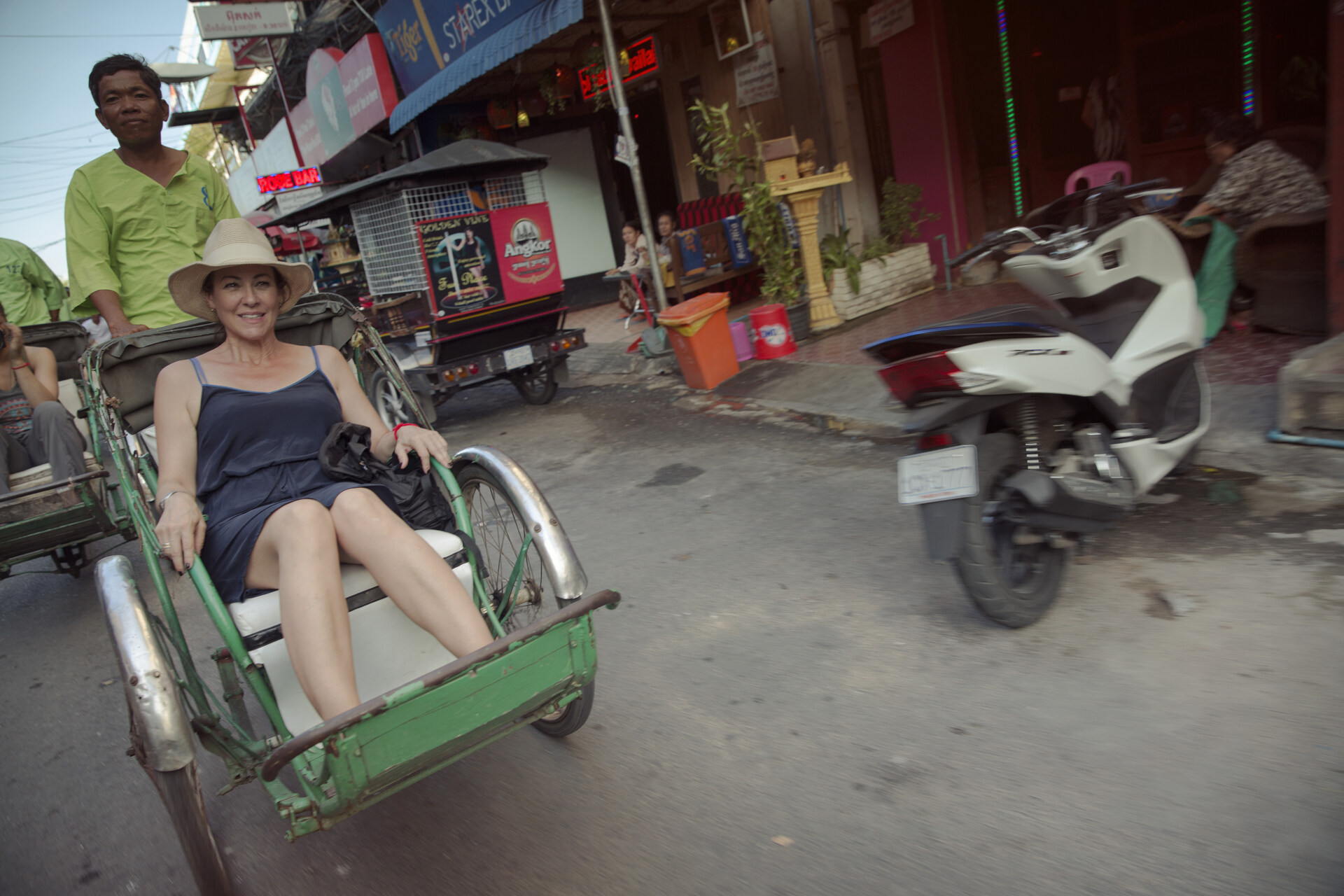
Cambodia’s capital sits where the Mekong, Tonlé Sap, and Bassac rivers meet, and Sisowath Quay, right along the Tonlé Sap, is a good place to get a feel for the city. Just off the waterfront is the Royal Palace, official residence of the King of Cambodia, its gilded roof and three-spired Throne Hall dominating the skyline. Inside the grounds, the Silver Pagoda lives up to its name — the floor is covered with more than 5,000 silver tiles — and houses a myriad of Buddhist images and treasures.
While you're there, visit the National Museum next door, home to an impressive collection of Khmer art and sculpture that offers a window into the country’s history. Look out for the towering sandstone Garuda near the entrance, a mythical bird recovered from the Prasat Thom temple site at Koh Ker, and don’t miss the eight-armed Vishnu statue from the 6th century, found at Phnom Da, a historic hill and archaeological site south of the capital. For a look at contemporary Cambodia, head to Factory Phnom Penh, a former garment factory turned creative space packed with art galleries, studios, and murals.
When hunger calls, wander down to Sisowath Quay, lined with restaurants, cafes, and mobile vendors — try a plate of lok lak (Cambodian black pepper beef) or num banh chok, a Cambodian rice-noodle dish. Stop by the Russian Market (Phsar Toul Tumpong) too, for tropical fruit.
A trip to Phnom Penh isn’t complete without a visit to the Tuol Sleng Genocide Museum and the Choeung Ek killing fields, just outside the city. Through the late 1970s, Cambodia was terrorized by the Khmer Rouge regime, and walking through either site gives you a real sense of the cruelty and hardship Cambodians endured. At Choeung Ek, a memorial stupa holds victims’ skulls. Pick up an audio guide and go at your own pace, or book a private guide if you want more context.
Come evening, head to Bassac Lane and nearby Street 308, where a handful of small bars make for an easy place to settle in for a drink.
Detour: If you can spare a day, Oudong is worth the 35km (21.7 mi) drive out. Once the capital of Cambodia, Oudong served as the seat of power from the early 17th century until 1866, when the royal court moved to Phnom Penh. Today, its hilltop temples, stupas and scattered ruins offer a glimpse into Cambodia’s post-Angkor history, with views across the surrounding countryside.
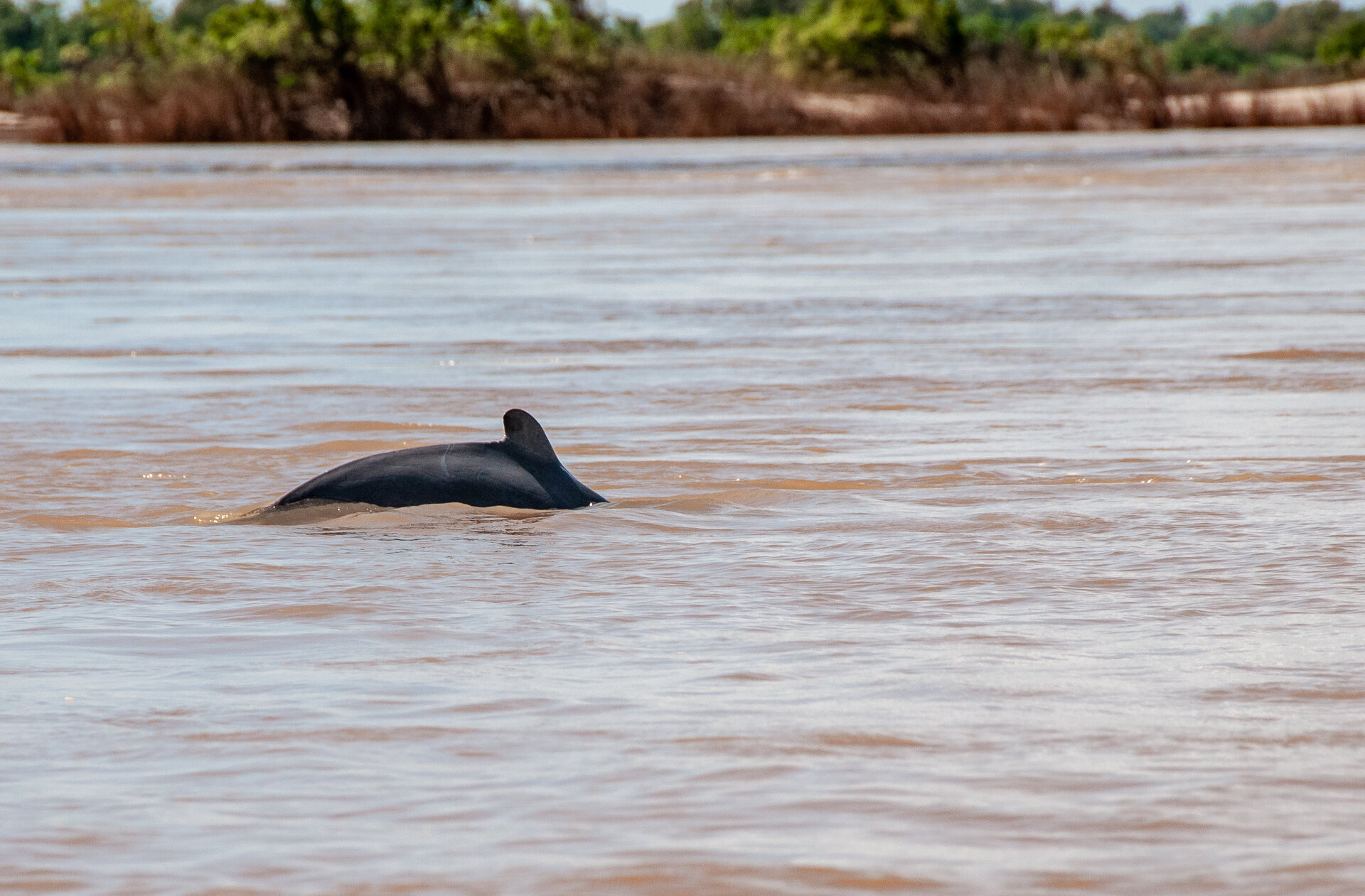
This riverside town on the Mekong is the best place in Cambodia to see the critically endangered Irrawaddy dolphin. Boats depart from the small village of Kampi, about 30 minutes by tuk-tuk, taking visitors out to the stretches of river where the dolphins are often seen – or opt for kayaking, a quieter way to watch them in their natural habitat. The dry season, from November to May, is the best time to go.
For a change of pace, take the short ferry to Koh Trong, an island opposite Kratie, where you can spend your time lazing on sandy river beaches, cycling past stilt houses or, for something more active, climbing its gentle inclines for views across the Mekong. Back in town, the riverfront is lined with weathered French colonial buildings and makes a good spot to watch the sunset. Kratie is also known for kralan — sticky rice cooked in bamboo — which you can savour in Thma Kreae village along National Road 7.
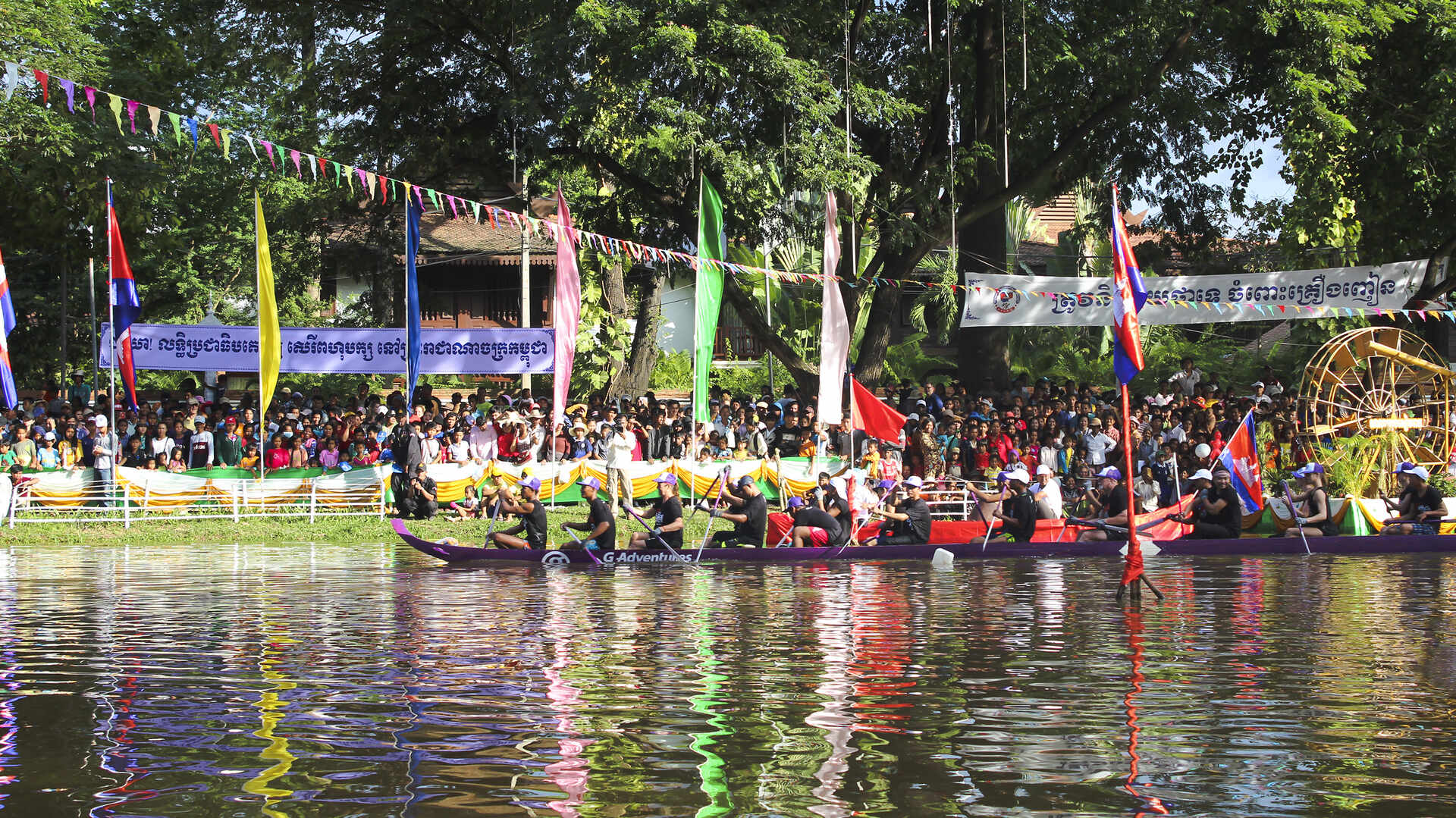
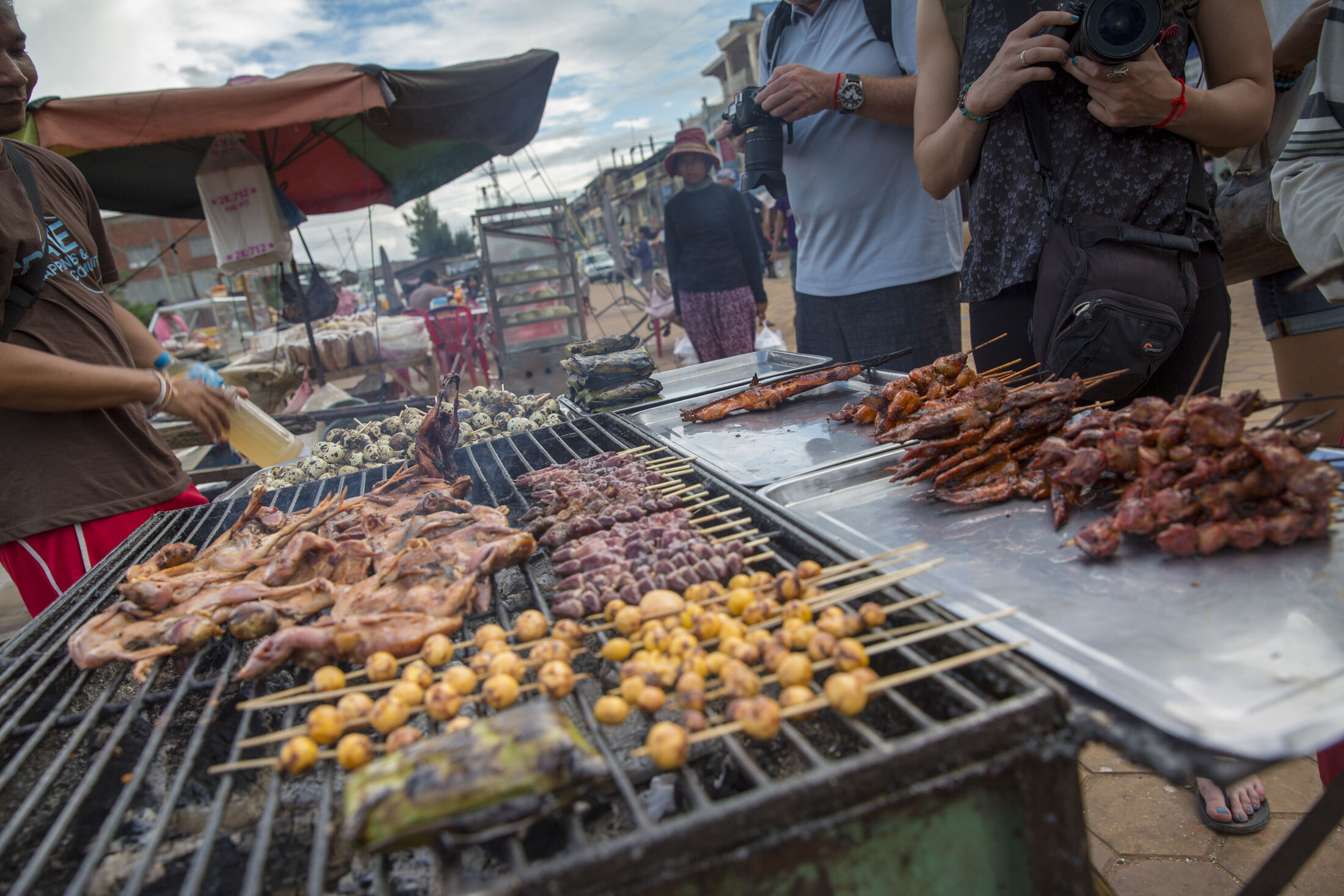
Angkor may draw the crowds, but Siem Reap is worth lingering in. Visit the Wat Preah Prom Rath, one of the city’s largest pagodas, or head to Artisans Angkor to learn about traditional Khmer crafts, from silk weaving to stone and wood carving. Pause for grilled skewers of meat at the Old Market or Psar Chas, where stalls sell fresh produce, spices, seafood and Cambodian snacks; adventurous eaters can even try fried tarantulas.
For a change of scenery, take a boat ride onto Tonlé Sap, Southeast Asia’s largest freshwater lake and visit floating villages such as Kampong Phluk and Kampong Khleang to see what life is like on the lake. If you’re travelling with kids, visit Kulen Elephant Forest, about an hour from Siem Reap. It’s home to retired working elephants, where you can learn about their behaviour, feed them and even give them a bath.
After dark, see Phare Circus in Siem Reap, where Cambodian performers combine acrobatics, live music and theatre to tell stories drawn from Khmer culture and contemporary life. Then head to Pub Street, dotted with bars and live music, for a night on the town.
Detour: For a quieter alternative to the temples of Angkor, make the one-and-a-half-hour journey to Beng Mealea, a 12th-century temple with a layout reminiscent of Angkor Wat and jungle-covered ruins that look straight out of an Indiana Jones film. Or, head to the UNESCO-listed Koh Ker, about a three-hour drive from Siem Reap and once the capital of the Khmer Empire. Its temples are scattered through the forest, with the huge seven-tiered pyramid of Prasat Thom as the standout.
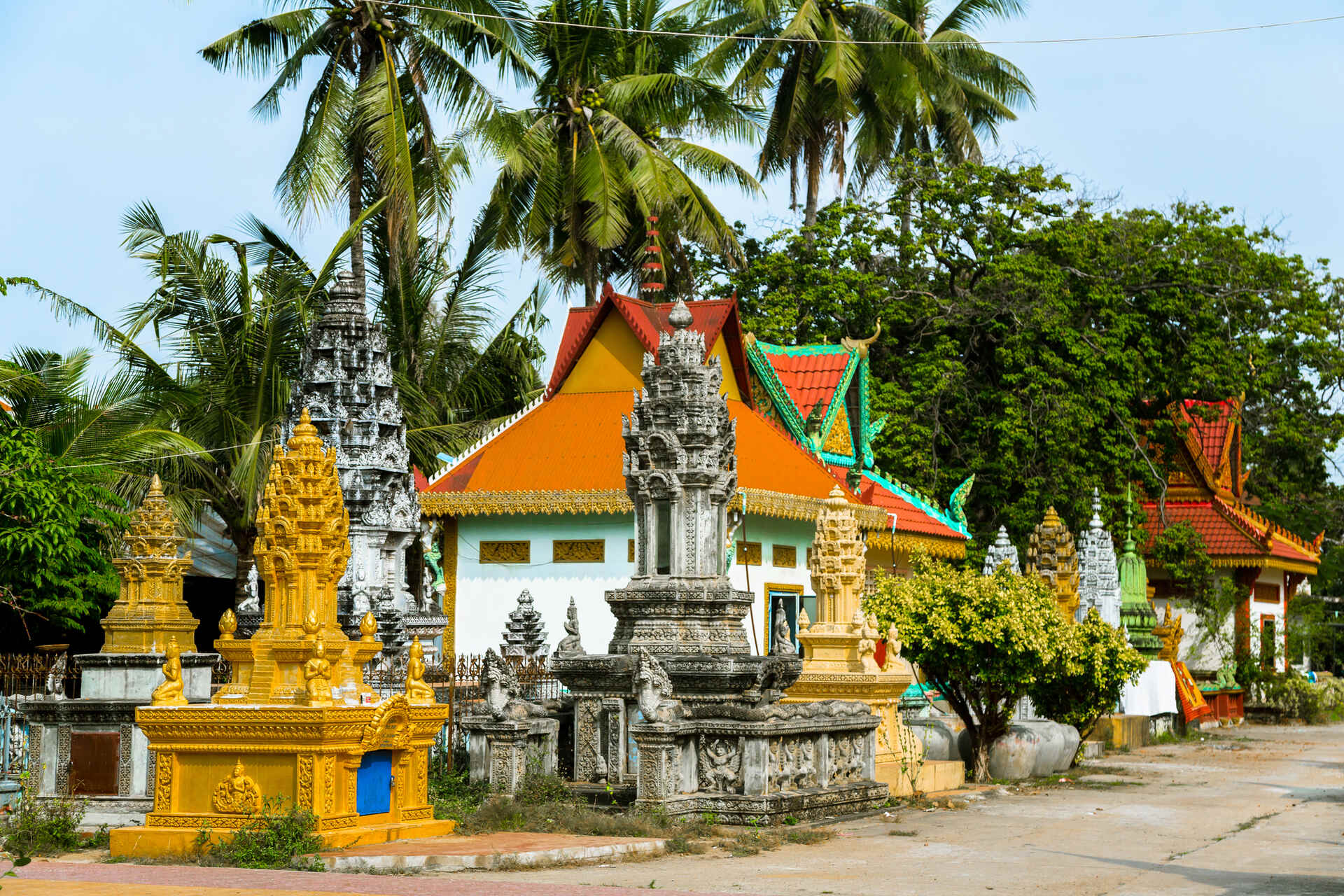
Foodies should make a beeline for Battambang, Cambodia’s first UNESCO Creative City of Gastronomy. The city sits in the country’s rice bowl, surrounded by fertile farmland that supplies its markets with rice, fruit and vegetables, and its food culture was recognised by UNESCO in 2023. Start at Psar Nat, the Art Deco central market, where you can browse the produce and food stalls. Make sure you try the kuy teav, a traditional noodle soup.
Once satiated, take a stroll around the old town area and admire the well-preserved French colonial buildings, including the grand French Governor’s residence. Art and architecture aficionados should also visit the temples of Wat Ek Phnom and Wat Banan around the city for their fine bas reliefs, and Phnom Sampeau for its hilltop temples and the Killing Caves, a sobering memorial to those killed under the Khmer Rouge.
Stay until sunset for the daily spectacle of a huge number of bats pouring from a cave in the cliff face and streaming into the darkening sky. An unmissable Battambang experience is a ride on the Bamboo Train, a simple wooden platform fitted with wheels that rattles through the Cambodian countryside.
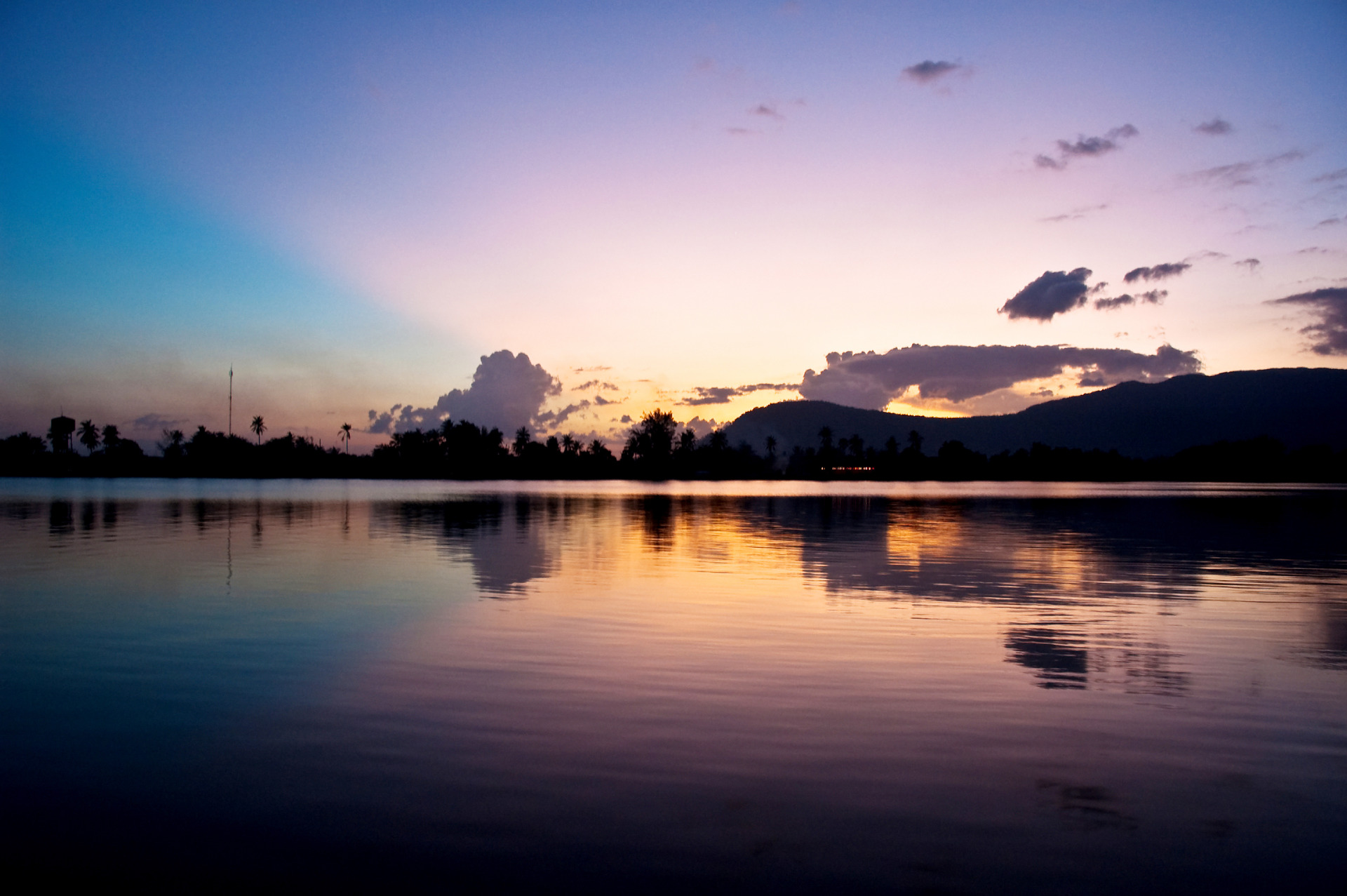
For a laid-back stretch of coast, the twin towns of Kampot and Kep down south are hard to beat. Kampot was once a French administrative outpost and Cambodia's busiest port, and you can still feel the Gallic past walking the town centre, where 19th-century shophouses and villas lean into narrow streets that haven't changed much in a century. Beyond the architecture, the real draw is what grows in the hills around it: Kampot pepper.
Tour one of the local pepper farms to see how it’s grown and harvested, then taste why the pepper earned Protected Geographical Indication status in 2010 — the same protection given to Champagne, and the first time any Cambodian product was recognised this way. Nearby, the salt fields are worth a look too, still harvested by hand the old way. For something more active, kayak or paddleboard the Kampot River, or drive up into Bokor National Park, home to a former French hill station with its old Catholic church, restored Le Bokor Palace, and viewpoints overlooking the forest and out to the sea.
Less than an hour away, Kep drew Cambodia’s elite through the 1950s and 60s, back when it rivalled the French Riviera for glamour. These days, it’s all about seafood. At the Crab Market, stalls sell what came off the boat that morning and fry it up on the spot — order kdam chaa mrech, crab stir-fried with Kampot’s green peppercorns, and you’ll understand why the two towns get mentioned in the same breath.
Walk it off on the 8km (4.97 mi) circuit through Kep National Park, passing a pagoda and small nunnery before reaching Sunset Rock viewpoint, with panoramic views over the coast, or take a boat to Koh Tonsay, better known as Rabbit Island, for an afternoon on the beach.
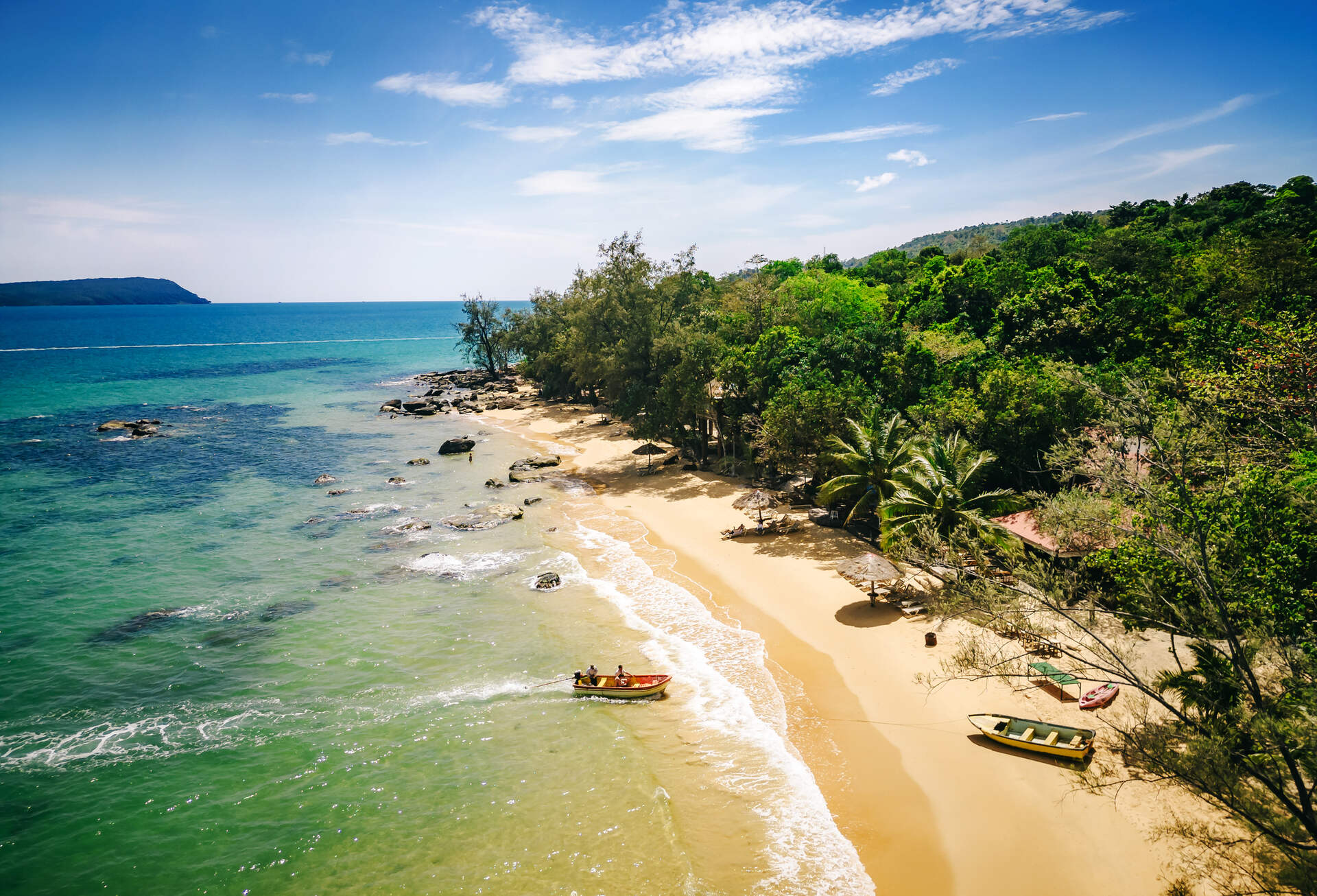
If you want some proper beach time, take the boat from Sihanoukville to Koh Rong, where Long Set Beach has a long stretch of golden sand and clear, shallow water. On nights when the conditions are right, you can swim out to see bioluminescent plankton glowing in the water. On the western side, the 7km-long (4.35 mi) Long Beach, also known as Sok San Beach, is a quieter alternative, with plenty of space for swimming and sunbathing. Koh Rong also has a livelier side around Koh Touch, where beach bars and restaurants stay busy after dark.
When hunger strikes, seafood is easy to find, with beach barbecues serving grilled fish and other fresh catches, while Thai dishes are also widely available. Neighbouring Koh Rong Sanloem is the island to choose if you want things slower. Crescent-shaped Saracen Bay, with its white sand and calm, shallow water, is made for lazy days, while dive shops and boat operators can take you out to snorkel, dive or see bioluminescent plankton after dark.
Accommodation ranges from simple bungalows to lavish villas. On the western side, Lazy Beach and Sunset Beach are quieter and more secluded, with rougher seas and fewer places to stay. If you want to get that Instagram-worthy shot, climb the island’s lighthouse yielding an incredible view of the coast.
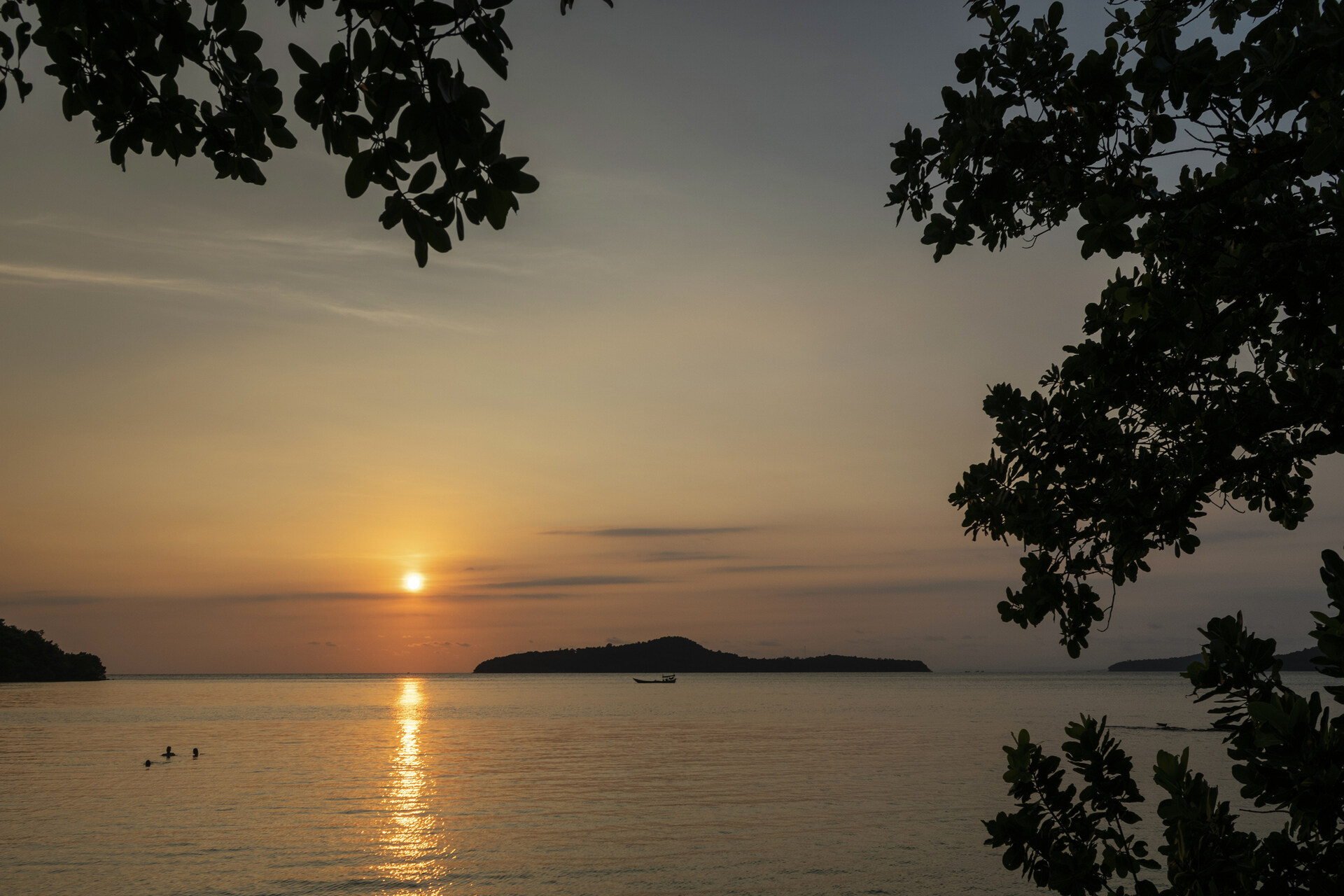
Sihanoukville is Cambodia’s gateway to the islands, but there’s enough on the mainland to warrant a stop. Otres Beach is where to go for a relaxed day by the sea — palm trees, small local and expat-run restaurants doing everything from seafood barbecues to Western comfort food, and a scattering of upscale places to stay along the sand. For something secluded, Independence Beach has small fishing piers and boulders that are hard to resist climbing, while Serendipity is the livelier pick, its boardwalk of ocean-facing restaurants and bars filling up with music after dark.
For a bit of adventure, take a boat out to Koh Ta Kiev to snorkel its clear water, or head inland to Ream National Park to hike through rainforest or kayak the mangroves, keeping an eye out for the kite and white-bellied sea eagles overhead.