
Madi Wong
Editorial Content Lead
Editorial Content Lead
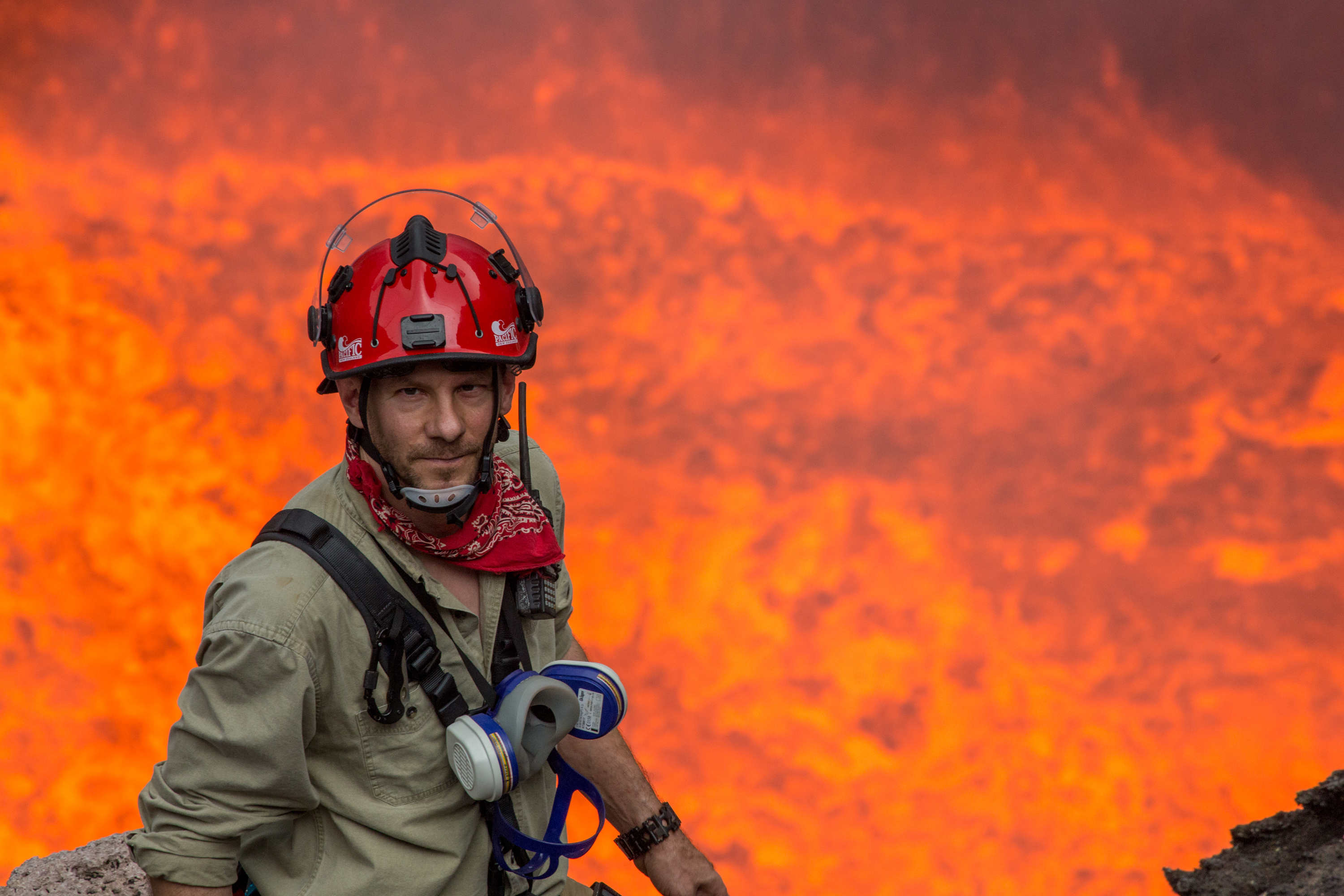
Ever since he was a child, George Kourounis has always been drawn to exploring the earth and natural world.
“I remember fondly being out on my bike in a hail storm, or swimming through a flooded creek, or jumping off cliffs into a nearby quarry … It just was always there as a kid, that love of science and nature. I wanted to be a marine biologist, and then I sort of took a diversion,” he said.
Kourounis initially kickstarted a career as a music and sound engineer, building recording studios. But in his free time, he chose to chase and film storms, pitching himself to various news outlets whenever he was on scene for significant events like Hurricane Katrina.
“It started with lightning, and went to tornadoes, and hurricanes, and then wildfires, and then volcanoes, and then polar regions, and deserts, and remote areas of the world that just kept spreading, and the more I did, the more I wanted to do,” he said.

“And a big part for me is sharing what I've seen, because it's no good if I just go somewhere that's difficult, or maybe dangerous to get to without sharing that experience as best I can through television and through speaking engagements.”
Several global networks including BBC and CNN took notice of Kourounis’ work and he soon became the go-to expert for natural phenomenons unfolding around the world.
Then came the turning point in 2006, when a TV producer saw one of his stories in the news and approached him with a simple proposal: “Let's make a show.”
That was the moment everything changed — and when ‘Angry Planet’ came to life.
Their initial six‑episode pitch, which followed Kourounis into wild places to explain the science behind tornadoes, volcanoes and other extremes, was rejected by Discovery Channel but picked up by the Outdoor Life Network — on the condition that they expand it to 13 episodes.
“I lifted my jaw up off the floor, went to my bucket list, and said, ‘Ok, I guess I've got to bring up seven new ideas. And it was basically everything that I wanted to do that I didn't think I'd ever have the opportunity to do, it just materialized,” he said.
Through 49 episodes of ‘Angry Planet’ and numerous storytelling projects about the world, Kourounis has spent nearly three decades challenging the role of a traditional explorer by intentionally placing himself inside some of the planet’s most volatile environments.
Kourounis’ expeditions have been broadcasted to millions via National Geographic, the Discovery Channel, and the Science Channel. His work has earned him elite accolades, including the Leif Erikson Exploration Award, the King Charles III Coronation Medal, and the prestigious Stefansson Medal from The Explorers Club, cementing his status as one of North America’s top 100 explorers.

But his most iconic expedition occurred in 2013, when he ventured to a place that very few dared to go: into the heart of Turkmenistan’s Darvaza Gas Crater.
As the first person to ever descend into the scorching, burning expanse known as the ‘Door to Hell’, Kourounis didn't just chase adventure — he sought science — collecting critical research samples in one of the world’s most inhospitable environments.
“It took almost two years to get permission to go here, and we stretched fire-resistant ropes across the whole crate. We went out with all the special protective equipment, repelled down. I had 17 minutes worth of air to spend down at the bottom,” he explained.
“I was taking temperature measurements, I was gathering soil samples, and as I was digging, fire would come out of the hole that I was digging. We found bacteria living down there. I got the Guinness World Record for being the first person to ever do this.”
For Kourounis, fear isn't a barrier, it’s a tool. When that feeling of apprehension sets in, he says it’s his signal to pause, check in with his team, and re-evaluate his decisions.
But through each challenge, he still embraces discomfort, emphasizing its essential for development and growth.

“Fear is my friend, I use it as a tool. It's good to do stuff that makes you uncomfortable, right? A lot of people may think, why would I go to The Stans? There's a lot there, and it may not be at the top of everyone's travel list, but for the few that it is, they're in for a treat,” he said.
In his latest chapter as a National Geographic Expedition Expert, Kourounis will lead expeditions through ‘The Five Stans’: Kyrgyzstan, Kazakhstan, Tajikistan, Turkmenistan, and Uzbekistan.
“The general public doesn't know much. They can't find these places on the map. Most people don't even know that Tajikistan exists, or Turkmenistan,” he said.
“What I'm hoping is that people that come on this trip, I hope that I give them the opportunity to get a deeper understanding of some of the complexities and the history and the geography,” said Kourounis.
To Kourounis, The Stans are far more than pins on a map. It’s where historic trades occurred on the ancient Silk Road, where the dramatic peaks of the Pamir Mountains lie, and where local communities offer unmatched hospitality.
“I think the best thing that people can take away is a better understanding of the history, why this place is the way it is, and the subtle differences between the different countries. Get a taste of the culture through meeting and spending time with local families, meeting with the people,” said Kourounis.
Travel with George on National Geographic Signature with G Adventures: Signature: The Five Stans & the Heart of the Silk Road

For Kourounis, the expedition is more than being a guide, he also sees himself as a storyteller and entertainer, fostering connections and exchanging tales with travellers, whether it’s on the road or at the dinner table.
“When you're sitting down with a group at dinner, there's stories to be told. With people that travel on these types of trips, they're really well travelled as well, so also from a totally greedy point of view, I want to hear their stories too,” said Kourounis.
“From as far back in time as humans were able to communicate, the story was the one thing that was the main source of information, entertainment, wisdom, generational knowledge. It's all about stories, and we remember stories more than we remember facts.”
Read more stories like this:
How this National Geographic Expedition Expert offers a local lens on Japan’s history and culture
How this National Geographic expert enriches and educates travellers
This National Geographic Expedition Expert has been conducting research in Patagonia for 25 years